

On April 4, 1974, Kathryn Bright and her brother Kevin came back to her house on East 13th Street in Wichita. An armed man was waiting inside. Kevin fought him and got out to find help. Kathryn died in surgery that afternoon. She was 21. In 2005, Dennis Rader pleaded guilty to her murder. (State’s Summary, pp. 8–11) (Guilty-plea transcript, pp. 37–45, 74)
Explore the story and records
Her family called her Kathy
Kathryn Doreen Bright was born February 24, 1953. She had turned 21 just weeks before she died. Her name and dates are on the marker we photographed at Hillside Cemetery. (Our memorial photograph, inscription)
She graduated from Valley Center High School in 1971, spent a semester at the University of Kansas, then came back to work at Coleman. The Wichita Eagle reported that by April 1974 she had been in the house on East 13th Street less than a year. (The Wichita Eagle, “The Victims”, digital p. 39)
Kathryn’s cousin Marcia Brown remembered weekends at their grandparents’ farm in Valley Center. With five Bright children and 18 cousins, there were plenty of kids to feed the animals and ride behind a donkey named Candy. Kathy learned the ukulele around age nine and performed with other children dressed in Hawaiian clothes. Brown also remembered singing at First Baptist with Kathy and Kathy’s older sister Karen. (Tobias, attributed newspaper reprint)
Kathryn lived at 3217 East 13th Street in Wichita. Kevin still lived in Valley Center. Their father, Charles, owned the Chevrolet pickup officers reported seeing outside the house. (FBI records, digital pp. 34, 170–171) (State’s Summary, pp. 9–10)
The night Kevin stayed over
Kevin told police from his hospital bed that he had stayed at his sister’s on April 3 because it was snowing. (State’s Summary, p. 10)
Kevin estimated that he and Kathryn returned around 12:30 the next afternoon. An FBI briefing prepared later put the attack between 1 and 2 p.m. (State’s Summary, p. 10) (FBI records, digital pp. 34, 170–171)
Rader said in his guilty plea that he had seen Kathryn enter her house on another day. He said he waited inside on April 4, expecting her to come home alone. (Guilty-plea transcript, pp. 37–39) (State’s Summary, pp. 63–64)
When the two came in, the man claimed he was wanted in California and needed money and a vehicle. Both Kevin and Rader later described that story. (State’s Summary, pp. 10–11) (Guilty-plea transcript, pp. 39–40)
Kathryn and Kevin fought back
Kevin said the man forced him to tie Kathryn, then took him into another room. Rader also recalled separating them, though he was unsure of parts of the sequence. (State’s Summary, pp. 10–11) (Guilty-plea transcript, pp. 39–43)
In his August 17, 2005, CNN interview, Kevin said he fought the attempted strangulation, aimed the handgun toward the attacker’s stomach, and twice pulled its trigger without a discharge. The intruder regained the gun and shot him. Kevin described a second struggle and shooting before escaping. (Kevin Bright, CNN, Aug. 17, interview with Bob Costas)
Rader’s plea account separately described two handguns: a .22 and a magnum in a shoulder holster. He admitted shooting Kevin twice and described the fight over the second weapon. His explanation of the trigger and the struggle is his own reconstruction of the encounter; the medical account supplies the independent fact that Kevin sustained two gunshot wounds to the head. (Guilty-plea transcript, pp. 40–42) (State’s Summary, pp. 10–11)
Rader told Judge Gregory Waller that Kathryn fought him and that he attacked her with a knife. He recalled stabbing her two or three times. The medical evidence gave a different count. Dr. William Eckert attributed her death to multiple stab wounds and strangulation. (Guilty-plea transcript, pp. 41–43) (State’s Summary, pp. 8–11)
Kevin got through the front door and reached the street alive. Rader said he saw him get away and left the property shortly afterward. (Guilty-plea transcript, pp. 43–45) (State’s Summary, pp. 9, 65–66)
Kevin found help across the street
William Williams and Edward Bell stopped to help. Kevin told Susan Peters that one man drove him to Wesley Medical Center while the other called the police. (State’s Summary, pp. 8–10) (Kevin Bright, CNN, Feb. 18, survivor interview clip)
Officer Dennis Landon was dispatched at 2:05 p.m. Police initially gave an East 17th Street address instead of East 13th. He reached the area at 2:08 p.m. (State’s Summary, p. 8)
Officers found Kathryn alive near the rear bedroom. She still had a telephone and could tell them her name and age. An ambulance took her to Wesley, where she died in surgery. (State’s Summary, pp. 8–11) (Guilty-plea transcript, p. 37) (Our memorial photograph, inscription)
Inside the house, investigators documented the broken rear-door glass and restraint materials. They recovered three .22 cartridge casings. The number of casings is distinct from the two gunshot wounds recorded for Kevin: in a later custodial account, Rader claimed that a round had discharged accidentally before the siblings returned. (State’s Summary, pp. 9–11, 65)
A telephone found with Kathryn and a disconnected bedroom telephone belong to the response evidence. The police-call account comes through Kevin’s helpers, while the telephone observations document what the officers encountered inside the house. (State’s Summary, pp. 8–10)
An eyewitness account and three decades of waiting
Police used Kevin’s description to make a composite, but it gave them no name. After Rader’s arrest, Kevin recognized him in a photograph taken in 1973. The newer picture had been harder for him to place. (Kevin Bright, CNN, Aug. 17, Kevin Bright and Richard LaMunyon interviews)
Kevin told the Houston Chronicle in 2005 that the wounds left him with years of disability and fragments still in his body. (Crowe, Robert, 2 Mar. 2005)
The FBI was still briefing investigators on Kathryn’s case in 2004. Its outline lists the East 13th Street address and notes that Kevin survived. (FBI records, digital pp. 33–34)
A later turning point in the wider BTK investigation came through a computer disk. The FBI’s Regional Computer Forensics Laboratory report says a disk was sent to a Wichita television station on February 16, 2005. Investigators recovered references including Dennis, Christ Lutheran Church, and Park City government. Searches connected the church presidency and city employment to Rader. The laboratory also assisted with computers, digital evidence, and related investigative work. (FBI/RCFL report, printed p. 11 / PDF p. 13)
The same official report describes digital work and DNA as part of the broader identification of BTK. That broad investigation must be distinguished from evidence recovered at Kathryn’s house. For the Bright murder, the record discussed here includes Kevin’s account, the scene and medical findings, Rader’s admissions, and material he retained about the attack. (FBI/RCFL report, printed p. 11) (State’s Summary, pp. 8–11, 63–66, 89)
Prosecutors listed an account Rader kept about Kathryn and Kevin. It was seven typed pages with corrections in his handwriting. He titled it An April Death. (State’s Summary, p. 89)
Kathryn’s name in the guilty plea
On June 27, 2005, Rader pleaded guilty before Judge Waller to ten counts of murder in the first degree. Kathryn was named in Count Five. On page 37 of the transcript, the judge begins asking him about her. (Guilty-plea transcript, pp. 37–45, 73–74)
Rader answered the judge’s questions about each count at the June hearing. In August, prosecutors filed a separate account based on the police interviews, scene records, and medical findings. (Guilty-plea transcript, pp. 3, 15, 73–74) (State’s Summary, filed 18 Aug. 2005)
Before sentencing, Kevin and his wife, Sharon, spoke with AP reporter Roxana Hegeman about what he might tell the judge after all those years. (Hegeman, Roxana, 16 Aug. 2005)
Judge Waller handed down ten consecutive life sentences on August 18, 2005. For the first nine counts, Rader had to serve 15 years on each before parole eligibility. The tenth required 40 years. Together that was 175 years before he could be considered for release. (Guilty-plea transcript, pp. 20–21) (District Court, Sedgwick County, Kansas, original pp. 2–4)
Rader was not sentenced to death. Kansas’s restored death-penalty statute took effect on July 1, 1994, according to the Kansas Department of Corrections. All ten murders to which he pleaded guilty preceded that date. Kathryn’s murder had occurred twenty years before the restored statute took effect. (Burghart, Nancy, Kansas Department of Corrections, historical law summary) (Guilty-plea transcript, counts and offense dates, pp. 4–9)
The evidence, item by item
The register separates scene and medical observations from survivor accounts, prosecution interpretation, Rader’s admissions, and the actual conviction. Each entry links to the supporting record.
Broken rear-door glass
Record. Officers described broken glass swept against the rear door.
Interpretation. Rader admitted breaking glass to enter and sweeping it up. The observed break and his explanation are separate parts of the entry evidence.
Distinction and status. The scene account appears in the prosecution filing; the entry sequence is Rader’s admission. (State’s Summary, pp. 9, 63–64) (Guilty-plea transcript, p. 38)
Separation and household restraints
Record. Kevin’s same-day account describes being forced to tie Kathryn, then being restrained in another room. Officers described tied garments, stockings, and cords.
Interpretation. Rader admitted separating the siblings but was uncertain about the initial tying order and some materials.
Distinction and status. Read the survivor’s reported sequence alongside the later recollection, with the scene materials as physical context. (State’s Summary, pp. 8–11) (Guilty-plea transcript, pp. 39–42)
Two wounds; three .22 casings
Record. The medical and scene summaries record two gunshot wounds to Kevin’s head and three .22 cartridge casings recovered in the house.
Interpretation. Rader admitted two shootings of Kevin. His custodial account also claimed an accidental discharge before the siblings arrived.
Distinction and status. The casing count is distinct from the injury count; Rader’s account of a prior accidental discharge remains attributed to him. (State’s Summary, pp. 9–11, 65) (Guilty-plea transcript, pp. 40–42)
The second handgun and Kevin’s resistance
Record. Kevin described fighting for a gun and pulling its trigger without a discharge. Rader described a magnum in a shoulder holster and a struggle over it.
Interpretation. Both accounts describe active resistance. The precise trigger mechanics come through their recollections rather than a separate laboratory finding.
Distinction and status. The survivor interview and plea account are cited separately. (Kevin Bright, CNN, Aug. 17, opening interview) (Guilty-plea transcript, pp. 41–42)
Kathryn’s fatal injuries
Record. The State’s filing attributes eleven stab wounds and death from multiple stab wounds and strangulation to Dr. William Eckert’s autopsy.
Interpretation. Rader admitted attempted strangulation followed by stabbing, but recalled two or three stabs.
Distinction and status. The medical count is eleven; the smaller number is his recollection. Count Five was adjudicated first-degree murder on his guilty plea. (State’s Summary, pp. 8–11) (Guilty-plea transcript, pp. 41–43, 74)
The telephone and the help response
Record. Officers found Kathryn alive with a telephone; the account also describes a disconnected bedroom telephone. Kevin reached two men and police were called.
Interpretation. These observations establish discovery and aid. They do not establish a completed call by Kathryn.
Distinction and status. The filing summarizes the 1974 response; Kevin later described how the two helpers divided their assistance. (State’s Summary, pp. 8–10) (Kevin Bright, CNN, Feb. 18, interview clip)
The vehicles and departure
Record. The family pickup remained outside. Rader admitted trying a key and leaving when Kevin escaped.
Interpretation. His plea and interrogation accounts differ over the vehicle he attempted to take.
Distinction and status. The article’s map locates documented places; it does not present a measured attacker route. (State’s Summary, pp. 9, 65–66) (Guilty-plea transcript, pp. 44–45)
An April Death
Record. Prosecutors listed a seven-page typed narrative with handwritten corrections among Rader’s retained material.
Interpretation. The document concerned Kathryn and Kevin and supplied Bright-specific corroborative material.
Distinction and status. Its viewpoint is Rader’s. It is evidence of his knowledge and retained account, not a neutral source for the victims’ thoughts. (State’s Summary, p. 89)
Computer disk and broader identification
Record. The FBI/RCFL report describes the February 2005 disk, recovered identifying references, and assistance to the BTK investigation.
Interpretation. Digital work and DNA contributed to the broader identification of Rader.
Distinction and status. That broad-case account is distinct from a claim that DNA identified him from the Bright house. (FBI/RCFL report, printed p. 11)
The admission and judgment
Record. Rader admitted Count Five in open court. Waller accepted the factual bases and adjudged him guilty of all ten murder counts.
Interpretation. The separate August judgment imposed the sentence for Kathryn’s murder and ordered consecutive terms.
Distinction and status. The outcome was a first-degree murder conviction on a guilty plea, June 27, 2005, followed by a life sentence on August 18. (Guilty-plea transcript, pp. 37–45, 73–74) (District Court, Sedgwick County, Kansas, original p. 3)
No matching evidence topics. Try another word.
Wichita and Sedgwick: the places in the record
The map brings together the former house site, Kathryn’s grave, and the courthouse where Rader entered his plea.
Former house site
3217 E 13th Street N, Wichita, Kansas
Our photograph shows the lot where Kathryn’s house stood at 3217 East 13th Street. It is private property. (FBI records, digital p. 34) (On Location with Jerri and Matt, original location notes)
Kathryn Bright’s grave
Hillside Cemetery, Sedgwick, Kansas
Our retained grave point: 37.913667, -97.4108037. The original native block displays “Unnamed Road, Sedgwick, KS 67135, USA.” The Harvey County Genealogical Society locates Hillside east of Sedgwick at SW 125th Street and South Hoover Road. This is the grave point from our collection, rather than a substituted cemetery entrance. (Our memorial photograph) (Harvey County Genealogical Society, Hillside entry)
Sedgwick County District Court
525 N Main St, Wichita, Kansas 67203
The court’s current main courthouse address provides institutional context for the 2005 proceedings. Approximate Census address point: 37.693816, -97.338261; it does not identify a courtroom or visitor entrance. Follow court visitor and security rules. (18th Judicial District Court, current courthouse address) (U.S. Census Bureau, address match, 16 Nov. 2026)
Other named places
Valley Center · University of Kansas · Wesley Medical Center
Valley Center was Kathryn’s school and family setting and Kevin’s home. The University of Kansas belongs to her earlier education. Wesley Medical Center received both siblings after the attack. The police response initially gave 3210 East 17th Street; that erroneous dispatch address is not plotted as a crime site. (The Wichita Eagle, “The Victims”, digital p. 39) (State’s Summary, pp. 8–11)
The site and memorial
Our photos show the vacant house site and Kathryn’s grave. Each is paired with its location map.
Former house site, East 13th Street

Kathryn Bright House



Cases near this location
Showing cases with mapped locations within 50 miles of this stop.
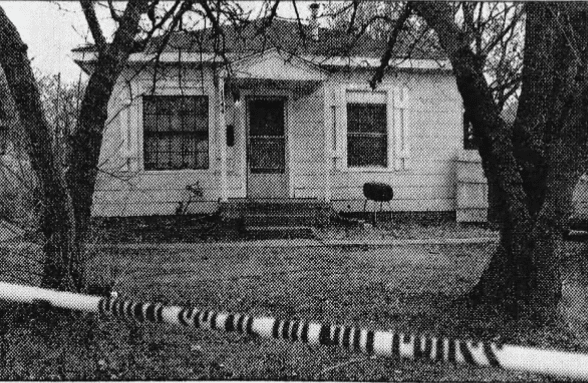 Tragedy Unfolds: The Brutal Night Cornelius Oliver Took 4 Lives
Crime Scene in Tragedy Unfolds: The Brutal Night Cornelius Oliver Took 4 Lives
 The Osage Reign of Terror
Mission Chapel Mausoleum.
 The Otero Family Murders: A Morning on North Edgemoor
Former Otero family home
 BTK's Infamous Crime: Marine Hedge's Tragic Story
Brittany Center Parking Lot where Marine Hedge's car was located.
 Remembering Nancy Fox: Victim of Dennis Rader
Residence in Remembering Nancy Fox: Victim of Dennis Rader
 Dennis Rader and the Murder of Shirley Vian: A True Crime Tragedy
Shirley Vian murder location
 Murder Location of Vicki Wegerle: A BTK Victim
Vicki Wegerle house, 2404 W 13th Street, Wichita, Kansas.
 Reginald and Jonathan Carr: The Wichita Massacre That Shook A Community
Heather Suzanne Francis Muller. Birth 21 Sep 1975. Death 15 Dec 2000 (age…
 Where the Real ‘Candy’ Murder Took Place
Betty was returned to Kansas and laid to rest at Upchurch Cemetery.nLocat…
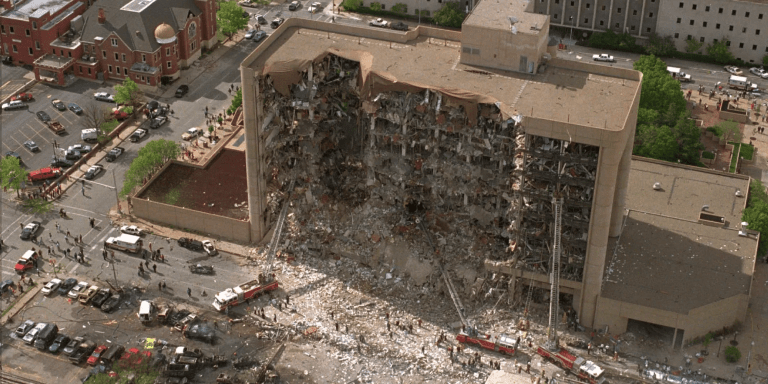 Oklahoma City Bombing: Unraveling the 1995 Attack
Historic / Notable Site in Oklahoma City Bombing: Unraveling the 1995 Attack
Hillside Cemetery, Sedgwick

Kathryn Bright Grave: Hillside Cemetery, Sedgwick, KS
Cases near this location
Showing cases with mapped locations within 50 miles of this stop.
BTK's Infamous Crime: Marine Hedge's Tragic Story
Marine Hedge was attacked at her house located at 6254 N. Independence St…
Tragedy Unfolds: The Brutal Night Cornelius Oliver Took 4 Lives
Grave / Memorial in Tragedy Unfolds: The Brutal Night Cornelius Oliver Took 4 Lives
Reginald and Jonathan Carr: The Wichita Massacre That Shook A Community
Heather Suzanne Francis Muller. Birth 21 Sep 1975. Death 15 Dec 2000 (age…
Murder Location of Vicki Wegerle: A BTK Victim
Vicki Wegerle house, 2404 W 13th Street, Wichita, Kansas.
The Osage Reign of Terror
Mission Chapel Mausoleum.
The Otero Family Murders: A Morning on North Edgemoor
Former Otero family home
Dennis Rader and the Murder of Shirley Vian: A True Crime Tragedy
Shirley Vian murder location
Remembering Nancy Fox: Victim of Dennis Rader
Residence in Remembering Nancy Fox: Victim of Dennis Rader
Oklahoma City Bombing: Unraveling the 1995 Attack
McVeigh made multiple large purchases of Ammonium Nitrate between Jan, 19…
Where the Real ‘Candy’ Murder Took Place
Betty was returned to Kansas and laid to rest at Upchurch Cemetery.nLocat…
The Kathryn Bright plea account
This is the part of the hearing where Rader talks about Kathryn. The uploader is thebtksite. Pages 37 to 45 of the court transcript cover the same testimony. (thebtksite) (Guilty-plea transcript, pp. 37–45)
Featured Video
Remembering Kathy
When Marcia Brown remembered Kathy, she talked about a donkey named Candy, the ukulele, and the three girls singing together in church. Those were the memories from the farm and the holidays before Kathy moved to Wichita. (Tobias, 2005 profile)
The stone at Hillside Cemetery gives her full name, Kathryn Doreen Bright. Kevin had known her long before the attack as the sister whose house he could stay at when it snowed. (Our memorial photograph, inscription)
Document and interview library
The plea and judgment give the conviction and sentence. The police and medical accounts in the state’s filing show what officers and doctors found on April 4.
Related reporting from our site: the Otero family story.
78 pages. Count Five, pp. 37–45; adjudication, p. 74. Court-reporter transcript; archived public copy in our document collection.
92-page prosecution filing. Bright response and medical account, pp. 8–11; interrogation, pp. 63–66; retained narrative, p. 89. Public-record mirror; not a verbatim hearing transcript.
Our selected excerpt contains original pages 2–4. Count Five and consecutive terms appear on original p. 3. Actual sentencing judgment.
397-page release. Briefing outline, digital pp. 33–34; case background, pp. 170–171. The collection also contains separately authored press clippings.
Printed p. 11, PDF p. 13: computer-disk examination and assistance to the broader BTK identification.
CNN Larry King Live transcript; Susan Peters interview clip describes his escape and the men who helped.
CNN Larry King Live transcript; Bob Costas interviews Kevin, followed by former police chief Richard LaMunyon.
Thebtksite’s Kathryn Bright segment of the plea account. Embedded above; compare with the court-reporter transcript.
Official Kansas Department of Corrections historical summary: restored law effective July 1, 1994. The historical law paragraph supplies the context used here.
No matching records. Try another word.
The written sentence
The judgment records the punishment imposed by the court. This page includes the life sentence for Kathryn’s murder and the order making the terms consecutive. Our linked judgment excerpt retains the original page numbers. (District Court, Sedgwick County, Kansas, original pp. 2–4)
Reader Notes
Add to the story.
Share a memory, correction, lead, or detail that helps the place come into focus.
Leave a note