
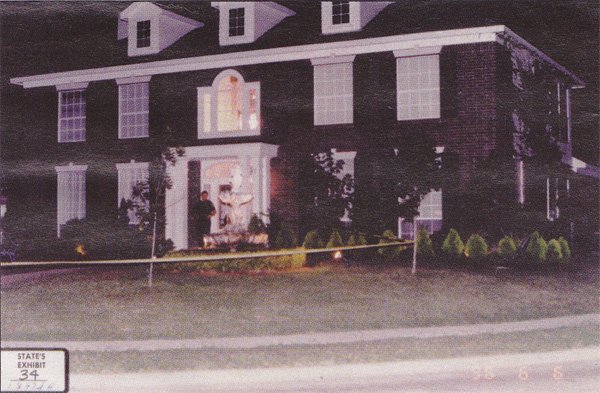
Before dawn on June 6, 1996, someone stabbed Devon and Damon Routier in the downstairs room of their home in Rowlett, Texas. Devon was six and Damon was five. Their mother, Darlie, was wounded and called for help. She said an intruder had been in the house. Police arrested her twelve days later. A jury convicted her of capital murder in Damon’s death and sentenced her to death.
(Reading of Indictment; The Verdict; Routier 2003)A home on Eagle Drive
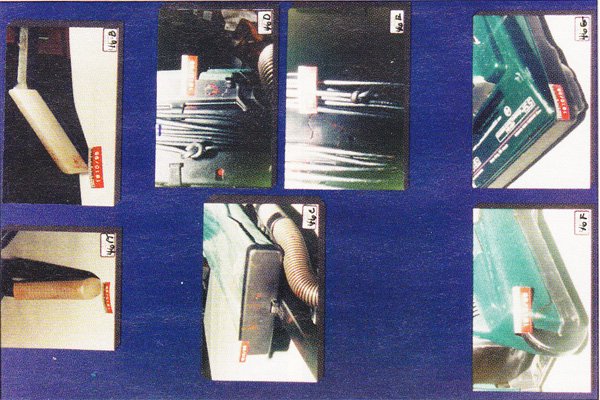
The Routiers lived at 5801 Eagle Drive, northeast of Dallas. The brick house had bedrooms upstairs and a family room below. In the photographs, the dining table is set and family pictures are near the television. Investigators would come to study things the family used every day, including the kitchen knives, a vacuum cleaner, and a glass. (Rowlett Police Department; The Darlie Routier Case; Charles Linch; Tom Bevel 1)
Darlie and Darin had three sons, Devon, Damon, and baby Drake. Their electronics business, Testnec, began while they lived on Bond Street and grew into premises off Main Street in Rowlett. Darin remembered an earlier apartment near Chaha Road in Garland. On Eagle Drive, neighborhood children came over to play. (Darin Routier 1; PDF pp. 3–6)
Darlie was 15 and Darin was 17 when they met on Mother’s Day in Lubbock in 1985. Her mother worked with him at Western Sizzler. Darlie gave their wedding date as August 27, 1988. Contemporary coverage placed the ceremony in his parents’ sunroom. (Darlie Lynn Routier; Davis)
Devon and Damon, before the case
Devon Rush Routier was born June 14, 1989. Damon Christian Routier was born February 19, 1991. Their shared grave marker and the cemetery’s recorded entries preserve those names and dates. On June 6, Devon was eight days short of his seventh birthday; Damon was five. (Rockwall County TXGenWeb)
At the trial, a neighbor remembered afternoons with the boys. A friend remembered their games, and a cousin remembered the lunch kits their mother packed for a family trip. (Barbara Jovell; Rebecca Neal; Amanda Gray)
Devon Rush Routier
Devon had completed first grade. Barbara Jovell, a family friend who testified at trial, remembered an intelligent child who liked video games and could be especially polite with adults when he was away from his mother. He and Damon played together, sometimes noisily, and took on the characters of Teenage Mutant Ninja Turtles and the blue and green Rangers. (Barbara Jovell; PDF pp. 43, 52)
Devon would have turned seven on June 14. That was the date the family picked to gather at the cemetery. (Rockwall County TXGenWeb; United States Court of Appeals for the Fifth Circuit)
Damon Christian Routier
Barbara Jovell remembered that Damon was quieter than Devon and made up his own mind about when he felt like talking. The boys could race around the house together or tease each other. They liked many of the same toys and television shows. (Barbara Jovell; PDF pp. 43, 52)
On the last evening, Darin remembered Damon curled up near the couch with a little black kitten. Their cousin Amanda remembered Darlie packing snacks and toys separately for each boy on a trip to Lubbock. (Darin Routier 1; PDF p. 25)(Amanda Gray)
Wednesday on Eagle Drive
Halina Czaban arrived around 8:15 or 8:20 a.m. to work at the house. She told the jury through a Polish interpreter that she saw Darlie and Rebecca Neal downstairs, and the boys around lunchtime. She remembered Rebecca leaving a little after 3. (Halina Czaban; PDF pp. 7–11, 22–25)
Rebecca went to the Routiers’ almost every day after school. In summer she often stayed while her parents worked. At the trial she talked about watching television and playing games with Devon and Damon. (Rebecca Neal)
Czaban remembered Darlie cooking and leaving the vacuum beside the pantry. Darlie said she made chicken noodle soup and rolls. Darin and her sister Dana came after six. The boys had dinner at their small table next to the adults and went outside again. (Halina Czaban; Darlie Lynn Routier; Darlie PDF pp. 25–28)
Later, television replaced outdoor play. Darin recalled Devon near the large television and Damon by the couch with the kitten. His June 8 statement placed baby Drake’s bedtime around 10 or 10:30. In that statement he described conversations about bills, work, the boys’ delayed baseball plans, caring for the baby, and a possible trip to Cancun with friends. He said he brought Darlie bedding and went upstairs around one. (Darin Routier 1; Routier)
Darin and Drake were upstairs by the time the call for help came. Darlie, Devon, and Damon were downstairs. (Rowlett Police Department; Routier 2003)
Thursday’s call for help
Around 2:30 a.m., Darlie called for help. She said someone had come into the house and stabbed her and the boys, then gone out through the garage. She also told the dispatcher she had picked up the knife. (Rowlett Police Department / Dickey; Rowlett Police Department)
Darlie testified that Damon woke her. She said she saw a man moving toward the utility room and followed him. She described moving the knife before she realized how badly the boys were hurt. Prosecutors argued that there had been no intruder and someone had staged the scene. (Darlie Lynn Routier; PDF pp. 47–51)(Reading of Indictment; Routier 2003)
Officer David Waddell had been sitting in his patrol car at Victory Baptist Church beside Highway 66 near the lake. He heard the emergency tones, switched radio channels, and drove to the address. Inside, he encountered Darlie on the telephone in the family-room and kitchen area. He saw the injured boys. Because the report involved an armed attacker, he waited for another officer before searching the garage. Lieutenant Matthew Walling arrived, and Walling cleared medical personnel to enter. (Officer David Waddell; PDF pp. 2–11, 18–19)
Paramedics Jack Kolbye and Brian Koschak had responded to a call that was updated to a possible stabbing. Kolbye estimated that they reached the house within five minutes and waited less than two minutes for police clearance. He went in with his medical kit. Koschak called for additional help. (Jack Kolbye; PDF pp. 3–7)
Darin said he heard screams and ran downstairs. He tried to revive Devon. Paramedic Brian Koschak checked Devon, while Jack Kolbye started CPR on Damon and carried him to the ambulance. Devon was pronounced dead at the house. Damon did not respond to treatment on the way to Baylor Dallas. (Darin Routier 1; Brian Koschak; Jack Kolbye; Rowlett Police Department)
Paramedics took Darlie to Baylor Dallas, too. Koschak told the court that they cut her shirt open to treat her. The shirt later went to the lab for testing. (Brian Koschak)
What investigators found in the house
By the time investigators began examining the house, family, officers, and paramedics had already been through the downstairs rooms. Officer Waddell described how the entry, family room, kitchen, utility room, and garage fit together. The diagram gives you a way to follow those places in the testimony. (Officer David Waddell)
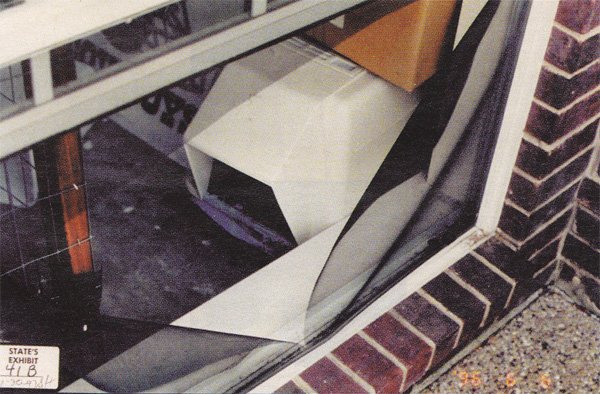
Police examined the garage screen and collected knives from the house. They photographed the vacuum, the broken glass, the bloodstains, and marks on furniture and doors. At trial, the state compared those observations with Darlie’s account. (Charles Linch; Tom Bevel 1; Routier 2003)
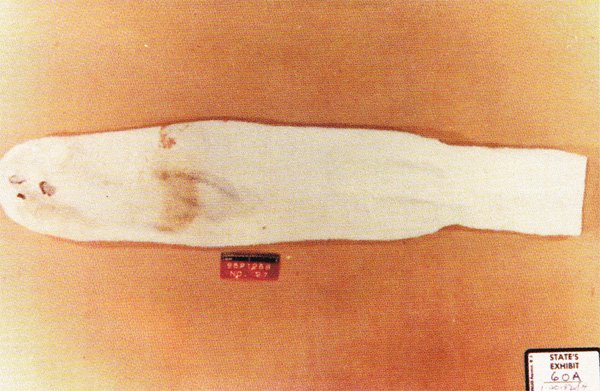
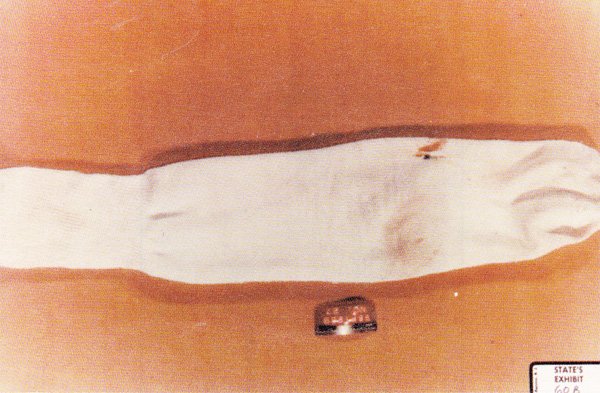
The search extended beyond the property. Sergeant Thomas Dean Ward testified that he and Officer Steve Ferrie searched south along the alley, checking containers and nearby areas. Ward found a white athletic tube sock beside a trash container at the rear driveway of 5709 Eagle Drive, which he described as the third house down. He reported seeing no blood trail on the alley pavement during that search. The important location is the rear alley and driveway, rather than the front of that neighboring house. (Thomas Dean Ward; PDF pp. 6–8; reporter pp. 1258–60)
Tests found blood consistent with both boys on the sock. The defense argued that someone had carried it out of the house. The state argued that it had been put there to make it look that way. (Judith Floyd 1; Routier 2008)
Scene control also entered the debate. Ferrie described an entry log begun at 5:57 a.m., after the emergency response, and recorded subsequent investigators and a neighbor entering the house. Those entries provide an actual record for questions about access and handling. They do not establish, by themselves, that a particular exhibit was contaminated. (Officer Steve Ferrie; PDF pp. 3–7)

The medical evidence: two deaths and a survivor
The children died from stab wounds. Dr. Joni McClain documented four separate sharp-force injuries to Devon. Dr. Janis Townsend-Parchman described four wounds to Damon’s back. Their medical examiners’ evidence established the injuries and cause of death; the further question for the criminal case was who inflicted them. A wound description cannot independently name its author. The jury heard that medical evidence alongside the physical scene, the parents’ accounts, and the state’s staging theory. (Dr. Joni McClain; Dr. Janis Townsend-Parchman)
Darlie’s neck wound became one of the most consequential points of disagreement. Treating surgeon Dr. Patrick Dillawn described stable vital signs and no major arterial or venous injury. His testimony also described a cut through the platysma muscle, with part of the carotid sheath visible. His use of the term superficial was a medical description in that context, not a statement that there had been no significant cut. (Dr Patrick Dillawn)
Defense forensic pathologist Dr. Vincent DiMaio reviewed the operative information, photographs, and laboratory values. He emphasized blood loss, the wound’s depth to the carotid sheath, and its proximity to the artery. He considered the overall injury and bruising pattern inconsistent with typical self-infliction. That was his expert interpretation, opposed to the prosecution’s contention that Darlie had injured herself. (Dr. Vincent DiMaio; PDF pp. 8–10; reporter pp. 4536–39)
The appellate court acknowledged how close the wound came to Darlie’s carotid artery. The doctors could describe its depth and the blood loss. The lawyers disputed what had caused it. (Dr Patrick Dillawn; Dr. Vincent DiMaio; Routier 2008)
Why the order of events mattered
Dr. Joni McClain described Devon’s death in terms of rapid blood loss and an estimated interval of minutes. Dr. Janis Townsend-Parchman testified that Damon’s death was not instantaneous: he could initially have moved and made sounds, with collapse and death occurring over a range of minutes. Those were qualified medical estimates, rather than a clock recording of the assault. (Dr. Joni McClain; Dr. Janis Townsend-Parchman; Townsend-Parchman PDF pp. 19–22)
Damon was still receiving care after paramedics arrived. The defense argued the state’s sequence left too little time for the attacks, the sock to be moved, the room to be staged, and the emergency call. The 2008 opinion acknowledged the timing difficulty. (Routier 2008)
Twelve days between the call and the arrest
Police initially said they were looking for an intruder. On June 6 they released Darlie’s description of a man in dark clothes and a ball cap. Her mother, Darlie Kee, asked the public for help finding him. (Rowlett Police Department)
Devon would have turned seven on June 14. The family went to his grave and Damon’s that day. A television camera recorded Darlie spraying Silly String. Prosecutors used the video to question her behavior after the deaths. Her lawyers pointed to the prayer service and what people knew of the family beforehand. (Darlie Lynn Routier; Dr. Lisa Clayton; Detective Jimmy Patterson 2)
Pastor David Rogers described a prayer service preceding the birthday gathering. Defense psychiatrist Lisa Clayton interpreted the gathering within a range of normal grieving and as an effort to reassure neighborhood children. (David Rogers; Dr. Lisa Clayton)
Police also hid a recorder in an urn at the graves. The family sued over that recording in Kee v. City of Rowlett. That case went to the Fifth Circuit as a privacy dispute. The jury in Darlie’s case saw the separate television footage. (United States Court of Appeals for the Fifth Circuit)
Police arrested Darlie at the Rowlett Police Department at 10:20 p.m. on June 18. They said they believed she had injured herself and that there had been no intruder. They took her to the county jail. (Rowlett Police Department)
Police said they did not believe Darin was involved. He supported Darlie’s account. Later lawyers revisited his statements while challenging the way the defense had handled other explanations. (Rowlett Police Department; United Press International; Routier 2003)
The trial moves to Kerrville
Publicity moved the trial from Dallas County to Kerr County. On January 6, 1997, the proceedings began in Kerrville before Judge Mark Tolle. The transferred case remained a Dallas County capital prosecution. The reading of the indictment identifies the case as F-96-39973-J, transferred as A96-253, and alleges the intentional killing of Damon, a child under six, by stabbing with a knife. (Reading of Indictment; PDF pp. 1–5)
Prosecutors Greg Davis and Toby Shook argued that the stains, the garage screen, and the objects inside the house contradicted Darlie’s account. Douglas Mulder and Richard Mosty were among the lawyers who argued an intruder had attacked the family. They questioned how police and the lab had treated the evidence. (Mr Toby Shook; Mr Greg Davis; Mr Doug Mulder)
Prosecutors pointed to the household’s debts and spending in arguing motive. Friends and relatives remembered Darlie as a loving mother. Her lawyers disputed the claim that money explained what happened to the boys. (Darin Routier 2; Mr Toby Shook; Mr Doug Mulder)
Witnesses from the neighborhood, the emergency response, the hospitals, and the laboratories described different portions of the record. State trace examiner Charles Linch examined the knives and screen material. DNA witnesses addressed the biological samples. Tom Bevel interpreted bloodstain patterns. The defense cross-examined those witnesses and called experts including DiMaio and psychiatrist Dr. Lisa Clayton. The legal contest was over both the observations and the inferences drawn from them. (Charles Linch; Judith Floyd 1; Carolyn Van Winkle; Tom Bevel 1; Dr. Vincent DiMaio; Dr. Lisa Clayton)
Darlie took the stand on January 29 and denied killing her children. She described the final evening and her account of awakening during the attacks. Cross-examination tested differences between what she had said at different times and what investigators believed the scene showed. Darin had also testified, and prosecutors questioned differences in his accounts of the rescue and towels. The jury had to assess those accounts alongside the physical evidence. (Darlie Lynn Routier; Darin Routier 1)
The insurance amounts in testimony
Darin testified that there were $5,000 riders for each older boy, $10,000 combined. He later put coverage on himself at $800,000 and said he thought Darlie’s coverage was $200,000. These are his stated amounts in testimony. They give the financial-motive dispute more precision than a bare suggestion of a large payout on the boys. (Darin Routier 1; PDF pp. 75–76)(Darin Routier 2; PDF p. 41)
Reading the physical evidence
The sock, the knives, and the stains all came up at trial. Here is what the witnesses found, what the lawyers argued, and what the courts decided.
The sock in the alley
Record. Ward placed the recovery beside a trash container at the rear of 5709 Eagle Drive. The 2008 opinion records six pretrial stain tests: three consistent with Devon, two with Damon, and one inconclusive.
State’s position. The sock could have been placed outside as part of staging.
Defense position. Its distance from the house supported the argument that a fleeing intruder carried it away and complicated the state’s proposed sequence.
Reading the evidence. The boys’ blood was identified on tested areas. That result does not identify who moved the sock. The 2008 court authorized retesting of the previously inconclusive stain; it did not find an intruder had deposited the sock. (Thomas Dean Ward; Judith Floyd 1; Routier 2008)
The butcher knife
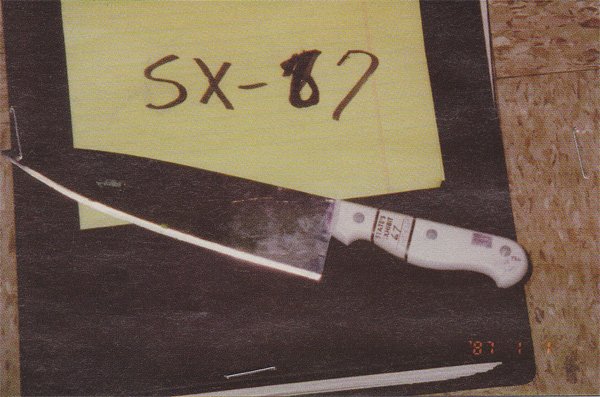
Record. The apparent weapon was a household butcher knife, reproduced as State’s Exhibit 67. The 2008 opinion describes four tested areas: two consistent with Darlie, one with Damon, and one a mixture of their types.
State’s position. A household weapon and surrounding stains fit the argument that the attack and its concealment originated inside the home.
Defense position. Darlie said she picked up the knife after the person left; her blood and handling were therefore not conceded to prove she attacked the boys.
Reading the evidence. The knife’s identity, individual sample results, and interpretation of handling must be kept separate. It is not the serrated bread knife discussed in the screen analysis. (Charles Linch; Routier 2008)
The bread knife and garage-screen debris
Record. Linch found microscopic particles and a fiberglass fragment in serrations of a separate bread knife that were consistent with screen material. He conducted comparison cuts.
State’s position. A knife from the kitchen used to cut the screen would support a staged point of entry.
Defense position. Cross-examination challenged source specificity, timing of deposit, tests, and possible transfer during fingerprint processing.
Reading the evidence. Linch could not date when the material was deposited. His 2002 affidavit recommended more discriminating chemical testing; it did not retract the microscopic-consistency finding. (Charles Linch; Linch)
Blood on the nightshirt
Record. Then-tested stains were consistent with Darlie and the boys, including mixtures. Bevel interpreted some patterns as consistent with cast-off from knife movement.
State’s position. The patterns supported an inference that Darlie had wielded the knife during the attacks.
Defense position. Counsel challenged the scientific basis, testing and handling; posttrial defense expert Terry Laber questioned staging and cast-off interpretations and proposed further tests.
Reading the evidence. DNA addresses possible contributors. Blood-pattern interpretation addresses a transfer mechanism. A pattern being consistent with cast-off is not a unique identification of one sequence. Later proposed tests are not completed exculpatory results. (Tom Bevel 1; Tom Bevel 2; Laber; Routier 2008)
Sink, glass, vacuum, and floor
Record. Investigators photographed household objects and stains; Bevel used their position and patterns in his reconstruction.
State’s position. The state argued that portions of the scene reflected cleanup or rearrangement rather than the intruder account.
Defense position. The defense challenged alternative explanations, movements during the emergency, and the analysis itself; Laber later questioned the reconstruction and proposed additional examination.
Reading the evidence. These were reconstruction opinions assembled from the scene. An overturned vacuum or glass position alone does not show who moved it, when, or why. (Tom Bevel 1; Tom Bevel 2; Laber)
Darlie’s neck wound and bruising
Record. Treating testimony described a cut through the platysma, with carotid sheath visible but no major arterial injury. DiMaio stressed blood loss and proximity to the artery.
State’s position. Prosecutors maintained that the injuries were self-inflicted to support a false intruder account.
Defense position. DiMaio regarded the pattern as inconsistent with typical self-infliction. The defense used the injuries to challenge the proposed staging.
Reading the evidence. The seriousness and anatomy of an injury are different questions from its cause. Neither a dangerous location nor stable vital signs independently identifies the person who made the cut. (Dr Patrick Dillawn; Dr. Vincent DiMaio)
The coffee-table bloody impression
Record. The 2008 court described a bloody palm impression on glass. The trial examiner lacked sufficient comparison detail for identification and considered its small ridge detail possibly juvenile.
State’s position. It did not establish the presence of an outside attacker.
Defense position. Later defense examiners argued that household adults were excluded and sought DNA work on possible biological material associated with the impression.
Reading the evidence. An unassigned print is not an identified outsider. The court’s DNA eligibility analysis considered defense assumptions without finding that a particular intruder made it. Do not merge this impression with material from the utility/garage door. (Robert Poole; Routier 2008)
Facial hair, pubic hair, and other hairs
Record. The 2008 opinion records a facial-hair result excluding the tested family members and a pubic hair that yielded no result. Different hairs and laboratory samples had different histories.
State’s position. Unattributed material in a lived-in home did not itself fix a donor’s presence at the time of the murders.
Defense position. The defense sought to connect foreign biological material to an attacker through improved DNA methods.
Reading the evidence. Excluding sampled relatives as a hair’s source is different from establishing when or how it arrived. The court allowed specified hair testing; it did not identify the killer from hair. (Charles Linch; Judith Floyd 1; Routier 2008)
Utility/garage-door material
Record. One material sample discussed in the 2008 appeal consisted of flakes previously tested by DQ-alpha analysis without detectable human DNA.
State’s position. The earlier result supplied no identified intruder.
Defense position. The defense sought more sensitive testing and considered whether a common foreign donor could connect several items.
Reading the evidence. An old negative or inconclusive assay does not prove an item lacks all biological material. Authorization for retesting is not a result or a match. (Routier 2008)
The call and changing accounts
Record. The emergency recording and statements were compared with testimony and the physical evidence. The parents described actions they said they took during the rescue.
State’s position. Prosecutors argued that discrepancies undermined the claimed intrusion and the parents’ descriptions of events.
Defense position. The defense relied on the emergency setting, injuries, stress, memory, and the account of an attacker.
Reading the evidence. A discrepancy must be stated specifically and attributed. Tone of voice is not, by itself, a clinical diagnosis or a forensic demonstration of guilt. (Rowlett Police Department / Dickey; Officer David Waddell; Darin Routier 1; Darlie Lynn Routier)
The birthday video and separate police recording
Record. Television recorded a June 14 grave gathering for Devon’s birthday. Separately, police covertly recorded at the gravesite; that conduct later prompted a civil privacy case.
State’s position. The state used the birthday footage in presenting its view of post-death behavior.
Defense position. The defense contested the inference drawn from the footage and litigated issues involving the separate police recording.
Reading the evidence. These are different recordings. The civil privacy ruling did not decide criminal guilt; a legal ruling on one recording should not be generalized to every cemetery image. (Darlie Lynn Routier; Dr. Lisa Clayton; Detective Jimmy Patterson 2; United States Court of Appeals for the Fifth Circuit)
Finances and proposed motive
Record. The jury heard about family debts, spending, work, and insurance in the state’s explanation of motive.
State’s position. The prosecution used financial strain and dissatisfaction to explain why a mother might kill her children.
Defense position. The defense disputed the proposed motive and presented evidence of family attachment, while challenging the state’s overall theory.
Reading the evidence. A motive theory is an argument based on circumstances. Insurance, debt, or spending is not direct proof of who inflicted a wound. Exact policy amounts belong with their specific testimony. (Darin Routier 2; Mr Toby Shook; Mr Doug Mulder)
No matching evidence topics. Try another word.
The verdict and the death sentence
On February 1, 1997, jurors found Darlie guilty of capital murder in Damon’s death. The judge polled them. Outside court, Darin continued to say he believed she would come home. (The Verdict; Associated Press)
At sentencing the jury heard from people who knew the family. Amanda Gray talked about the boys’ individual lunch kits, and Rebecca Neal recalled the afternoons she spent with them. They had come to tell the jury about Darlie and the children. (Amanda Gray; Rebecca Neal)
On February 4, jurors found that Darlie posed a continuing danger and found insufficient mitigation for life in prison. Judge Tolle imposed a death sentence. Texas records her arrival on death row as February 5. (Verdict on Punishment; Texas Department of Criminal Justice)
A corrected record, then a long DNA dispute
Problems with the first transcript carried the case back to court. Susan Simmons prepared a corrected record using notes and recordings. Routier sought a new trial over the problems. In 2003 the Texas Court of Criminal Appeals accepted the corrected record and upheld the conviction and sentence. (Routier 2003)
The direct appeal also addressed matters including lawyer conflicts, excluded testimony, a juror issue, and the reading of testimony during deliberations. Mulder had previously represented Darin in a limited matter involving a gag-order hearing. The court rejected the claim that the circumstances established the actual conflict asserted on appeal. It also upheld exclusion of defense investigator Lloyd Harrell’s testimony following a witness-sequestration violation. This appeal was broader than the cemetery footage, and it was not a new forensic examination of every exhibit: legal and factual sufficiency were not challenged in that direct appeal. (Routier 2003)
The U.S. Supreme Court declined review in May 2004. Texas denied her first habeas application that December. (Supreme Court of the United States; Court of Criminal Appeals of Texas)
Mixed blood versus overlaid blood
The 2003 opinion explains why the excluded Harrell testimony mattered to the defense. Blood already mixed before a stain reached the shirt could support an inference that Darlie was bleeding when a boy’s blood arrived. Her blood later overlying his could fit a different order. Bevel considered at least one relevant stain mixed and was less definite about the others. Harrell’s proposed account of Bevel’s earlier comments would have challenged that distinction; the appellate court upheld its exclusion under the witness rule. The issue was a disputed sequence inferred from stains, rather than DNA alone proving a chronological order. (Routier 2003; opinion PDF pp. 30–32)
What the 2008 decision actually changed
In 2008 the Texas Court of Criminal Appeals set aside a lower court’s refusal to allow some DNA testing. It sent the specified items back for testing under Chapter 64. The conviction and sentence stood. (Routier 2008)
The court examined the evidence item by item. It allowed testing of the previously inconclusive sock stain, a pubic hair, previously tested nightshirt stains, a facial hair, and material from the utility/garage door. Other requests failed statutory requirements then applicable. The opinion distinguished samples already tested from other samples on the same object and asked what newer methods could add. (Routier 2008; 273 S.W.3d pp. 249–57)
The judges considered what it would mean if the lab found the same unknown man’s DNA on several items. They were weighing the possible value of a test. The opinion also recognized the strength of the state’s evidence and the difficulty of making every part of the case fit a single account. (Routier 2008; pp. 257–60)
The later testing reports
A further testing order was reported in August 2014. (CBS Texas)
In November 2018, NBC 5 reported another round of testing, with the district attorney’s office confirming that it was proceeding under court order and by agreement. Defense lawyer Stephen Cooper described limits in earlier results, including degraded material associated with a bloody impression, and said the work had not then established the intruder defense. Those were the reported circumstances in 2018, not a statement about every later sample. (Heinz)
KRLD reported a further order in October 2021 covering nearly thirty items, including clothing, bedding, a knife, and hairs. A December report described additional work and an order for an Austin laboratory to provide findings to the defense. These dated developments show the continuing testing process. They should not be relabeled as a published DNA exoneration or as a new conviction. (Phillips; Phillips)
The Texas Department of Criminal Justice listed Routier on death row when we checked on November 18, 2026. The department’s schedule gave no execution date for her. (Texas Department of Criminal Justice; Texas Department of Criminal Justice)
The family beyond the courtroom
After the trial, Drake lived with his paternal grandparents under an arrangement that gave Darin visitation, according to reporting in February 1997. (United Press International)
Darin continued to say he believed Darlie was innocent. When he filed for divorce in 2011, he told AP that the decision was mutual and difficult and that it had not changed his view of the case. (Associated Press)
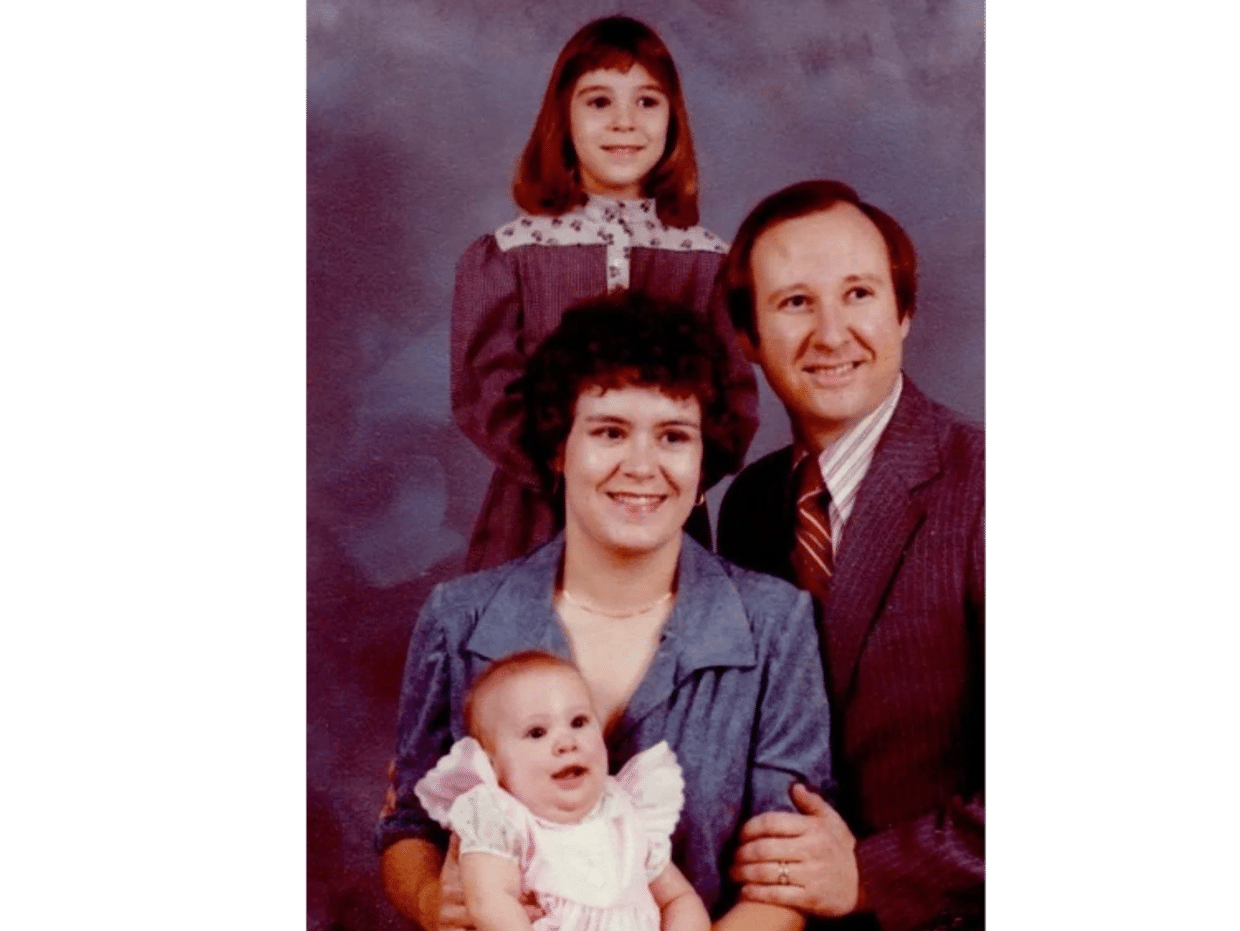
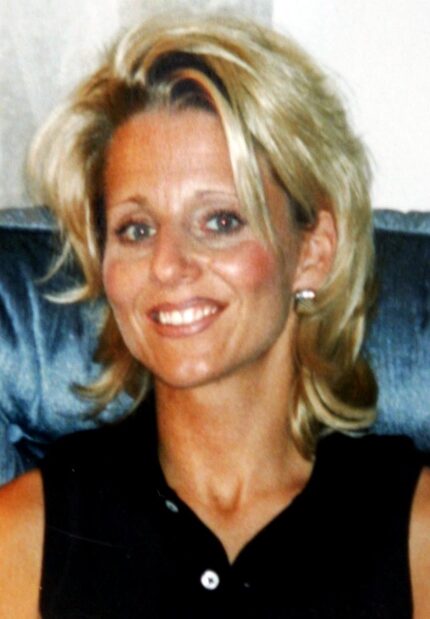
Devon finished first grade and was waiting for his seventh birthday. Damon was the quieter brother, the one Darin remembered near the couch with a black kitten. Their cousin remembered the way each boy got his own lunch kit. Those are the details we keep coming back to when we look at their photograph. (Barbara Jovell; Rebecca Neal; Darin Routier 1; Amanda Gray)
The places behind the record
The maps locate institutions and historical sites. They do not plot a suspected attacker’s route. Property points and city centers have different precision, identified in the captions and location guide.
Dallas–Rowlett–Rockwall: case locations
Explore the home, police department, cemetery, and hospital on a street map.
The map loads here. You can also open any place using the links below.
Use the zoom buttons or pinch to zoom. Select a pin or choose a place.
Regional locator: the home, current Rowlett Police Department address, cemetery, and Baylor Dallas campus. Property/cemetery pins are retained approximate site coordinates; the hospital campus point is from the Census geocoder. (On Location with Jerri and Matt; City of Rowlett; Baylor Scott & White Health; Rest Haven Funeral Home; United States Census Bureau) Street mapping: © OpenStreetMap contributors. Open the existing location and direction tools below.
Texas: places in the Routier case
Explore the cities connected to the family, the investigation, and the court proceedings.
The map loads here. You can also open any city using the links below.
Use the zoom buttons or pinch to zoom. Select a pin or choose a city.
Markers locate city centers, rather than individual buildings or an evidence trail. City coordinates: (U.S. Census Bureau, 2020 Gazetteer). Street mapping: © OpenStreetMap contributors.
The family home
5801 Eagle Drive, Rowlett, Texas 75088
Historical scene of the June 6 attacks. The map pin is property-level context retained from the existing article. The residence is private. (Rowlett Police Department; Officer David Waddell)
Open geographic point in an online mapThe sock-recovery area
Rear alley/driveway at 5709 Eagle Drive, Rowlett
Ward described finding the sock beside a trash container at the third house down. Use the rear alley description and exhibit photograph; the neighboring front address is not an exact evidence pin. (Thomas Dean Ward)
Dispatch references
Linda Vista and Willowbrook, Rowlett
Neighborhood references repeated during dispatch in the emergency-call transcript. (Rowlett Police Department / Dickey)
Waddell’s patrol position
Victory Baptist Church, Highway 66 by the lake, Rowlett
Waddell’s location when he heard the emergency tones. Street-and-area reference as given in testimony. (Officer David Waddell)
Baylor Dallas
Baylor University Medical Center, 3500 Gaston Avenue, Dallas, Texas 75246
Kolbye identified Baylor Dallas as Damon’s actual destination; Darlie also received treatment there. The printed address is the present campus address, not a reconstruction of an ambulance entrance. (Jack Kolbye; Rowlett Police Department; Baylor Scott & White Health)
Open geographic point in an online mapRowlett Police Department
4401 Rowlett Road, Rowlett, Texas 75088
Present departmental address. The historical record identifies the department as the place of the June 18 arrest and booking; the current institutional address is labeled separately from a claim about the 1996 room or building. (City of Rowlett; Rowlett Police Department)
Open geographic point in an online mapLew Sterrett Justice Center
111 West Commerce Street, Dallas, Texas 75202
Dallas County detention complex named in the transfer after arrest. Address is the current public complex address. (Rowlett Police Department; Dallas County Sheriff)
Rest Haven Memorial Park
2500 State Highway 66 East, Rockwall, Texas 75087
The brothers’ burial place and the June 14 gravesite gathering. This is the Rockwall cemetery, distinct from the operator’s Rowlett funeral home. The site coordinate is an approximate cemetery marker. (Rockwall County TXGenWeb; Rest Haven Funeral Home; United States Court of Appeals for the Fifth Circuit)
Open geographic point in an online mapKerr County Courthouse
700 Main Street, Kerrville, Texas 78028
Trial venue in January–February 1997 after transfer from Dallas County. The county’s official directory confirms the building address. (Reading of Indictment; Kerr County)
Dallas court and record custodian
Frank Crowley Courts Building, 133 North Riverfront Boulevard, Dallas, Texas
Current Dallas County felony-records location. The transferred trial was heard in Kerrville; this public address identifies the Dallas records institution, not the trial venue. (Dallas County District Clerk)
Death-row institution
Patrick O’Daniel Unit, 2305 Ransom Road, Gatesville, Texas 76528
TDCJ identifies this institution, formerly Mountain View, as the women’s death-row unit. The location is contextual to custody, not an execution appointment. (Texas Department of Criminal Justice; Texas Department of Criminal Justice; Texas Department of Criminal Justice)
The parents’ first meeting
Western Sizzler, Lubbock, Texas
Restaurant and city identified in their testimony and contemporary reporting; the dossier keeps the reference at that supported level. (Davis; Darlie Lynn Routier)
Earlier homes and business
Chaha Road, Garland; Bond Street and Main Street, Rowlett
Darin described an earlier apartment near Chaha Road, a house on Bond Street, and Testnec’s premises off Main Street. These are historical street-level references. (Darin Routier 1)
Family history and a proposed journey
Purgatory, Colorado; Jamaica; Cancun, Mexico
Darlie described an engagement trip to Purgatory and honeymoon in Jamaica. Darin’s June 8 statement described a possible Cancun trip discussed that evening, not a journey taken during the crime period. (Darlie Lynn Routier; Routier)
The appeal court
Austin, Texas
Texas Court of Criminal Appeals, which issued the 2003 direct-appeal and 2008 DNA opinions. City marker on the statewide locator. (Routier 2003; Routier 2008)
Later views of the house and alley
These site images appeared in the earlier article. They provide later location context alongside the historical case photographs.


Explore the case locations
Maps and location tools for the home, the police department, and the cemetery. Historical significance does not grant access to private property.
The home on Eagle Drive
Historical Routier family home and scene of the June 6, 1996 attacks. Private residence; view only from public areas. The sock was recovered elsewhere in the rear alley.



Cases near this location
Showing cases with mapped locations within 50 miles of this stop.
 Bonnie and Clyde (1967)
Consider the old house was pretty rundown in the movie, its no surprise t…
 Where the Real ‘Candy’ Murder Took Place
House of Allan and Betty Gore. It was here that on the June 13, 1980 that…
 The Texas Blockbuster Murder
Site of former Blockbuster
 From Outlaw to Obscurity: Finding the grave of Blanche Barrow
Grave / Memorial in From Outlaw to Obscurity: Finding the grave of Blanche Barrow
 The Von Erichs: A Tragic Dynasty
All the Von Erichs / Adkisson family members are buried at Grove Hill Mem…
 Stetson-Wearing Detective from Iconic Oswald Photo Finally at Rest
Grave of James Lavelle
 James Leavelle – The man in the hat
Grave / Memorial in James Leavelle – The man in the hat
 Jesse Curry's Burden: How JFK's Assassination Defined a Police Chief's Legacy
Grave / Memorial in Jesse Curry's Burden: How JFK's Assassination Defined a Police Chief's Legacy
 Sarah T. Hughes: A Historic Moment in U.S. Presidential History
Grave / Memorial in Sarah T. Hughes: A Historic Moment in U.S. Presidential History
 Sarah T. Hughes: The Trailblazing Judge Who Made History on Air Force One
Grave / Memorial in Sarah T. Hughes: The Trailblazing Judge Who Made History on Air Force One
 Abraham Zapruder – The man with the camera
The original house was purchased by a real estate developer and demolishe…
 Movements of Lee Harvey Oswald after the assassination of President Kennedy
Location where Lee Harvey Oswald was fatally shot by Jack Ruby. The area…
Rowlett Police Department
Current Rowlett Police Department address. The historical record identifies the department as the place of Darlie Routier’s arrest and booking on June 18, 1996. This is not the sock-recovery site.
Cases near this location
Showing cases with mapped locations within 50 miles of this stop.
Bonnie and Clyde (1967)
Consider the old house was pretty rundown in the movie, its no surprise t…
Where the Real ‘Candy’ Murder Took Place
House of Allan and Betty Gore. It was here that on the June 13, 1980 that…
The Texas Blockbuster Murder
Site of former Blockbuster
From Outlaw to Obscurity: Finding the grave of Blanche Barrow
Grave / Memorial in From Outlaw to Obscurity: Finding the grave of Blanche Barrow
The Von Erichs: A Tragic Dynasty
All the Von Erichs / Adkisson family members are buried at Grove Hill Mem…
Jesse Curry's Burden: How JFK's Assassination Defined a Police Chief's Legacy
Grave / Memorial in Jesse Curry's Burden: How JFK's Assassination Defined a Police Chief's Legacy
Stetson-Wearing Detective from Iconic Oswald Photo Finally at Rest
Grave of James Lavelle
James Leavelle – The man in the hat
Grave / Memorial in James Leavelle – The man in the hat
Sarah T. Hughes: A Historic Moment in U.S. Presidential History
Grave / Memorial in Sarah T. Hughes: A Historic Moment in U.S. Presidential History
Sarah T. Hughes: The Trailblazing Judge Who Made History on Air Force One
Grave / Memorial in Sarah T. Hughes: The Trailblazing Judge Who Made History on Air Force One
Abraham Zapruder – The man with the camera
The original house was purchased by a real estate developer and demolishe…
Movements of Lee Harvey Oswald after the assassination of President Kennedy
Location where Lee Harvey Oswald was fatally shot by Jack Ruby. The area…
Rest Haven Memorial Park
Rest Haven Memorial Park in Rockwall: burial place of Devon Rush and Damon Christian Routier and site of the June 14, 1996 graveside gathering.
Cases near this location
Showing cases with mapped locations within 50 miles of this stop.
Bonnie and Clyde (1967)
Filming / Pop Culture Location in Bonnie and Clyde (1967)
Where the Real ‘Candy’ Murder Took Place
House of Allan and Betty Gore. It was here that on the June 13, 1980 that…
The Texas Blockbuster Murder
Site of former Blockbuster
From Outlaw to Obscurity: Finding the grave of Blanche Barrow
Grave / Memorial in From Outlaw to Obscurity: Finding the grave of Blanche Barrow
The Von Erichs: A Tragic Dynasty
All the Von Erichs / Adkisson family members are buried at Grove Hill Mem…
Stetson-Wearing Detective from Iconic Oswald Photo Finally at Rest
Grave of James Lavelle
James Leavelle – The man in the hat
Grave / Memorial in James Leavelle – The man in the hat
Jesse Curry's Burden: How JFK's Assassination Defined a Police Chief's Legacy
Grave / Memorial in Jesse Curry's Burden: How JFK's Assassination Defined a Police Chief's Legacy
Sarah T. Hughes: A Historic Moment in U.S. Presidential History
Grave / Memorial in Sarah T. Hughes: A Historic Moment in U.S. Presidential History
Sarah T. Hughes: The Trailblazing Judge Who Made History on Air Force One
Grave / Memorial in Sarah T. Hughes: The Trailblazing Judge Who Made History on Air Force One
Abraham Zapruder – The man with the camera
The original house was purchased by a real estate developer and demolishe…
 The Murder of Sarah Walker: A Realtor's Tragic Story
Crime Scene in The Murder of Sarah Walker: A Realtor's Tragic Story
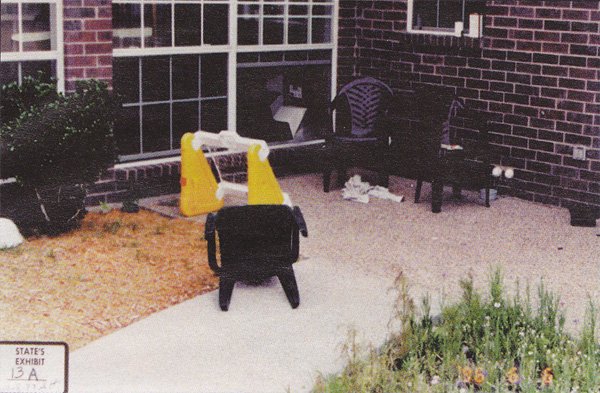
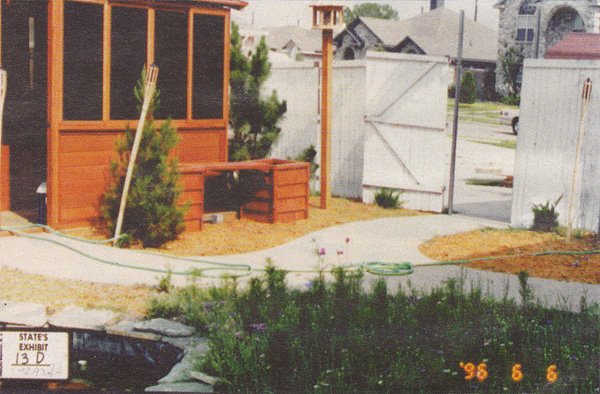
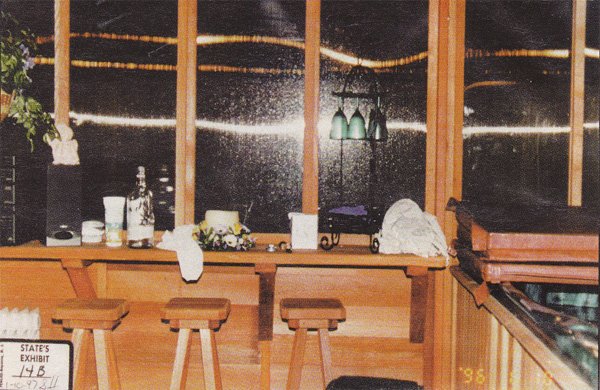
A closer look at the house and exhibits
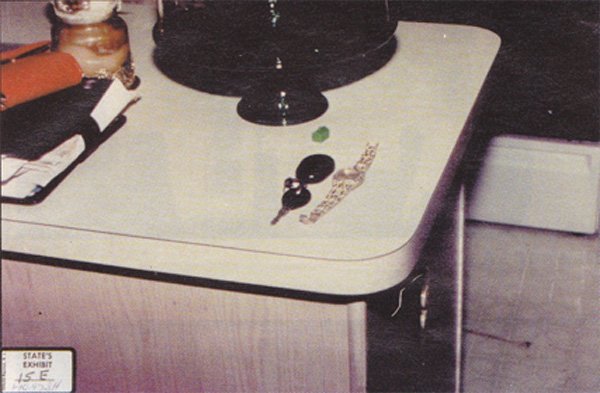
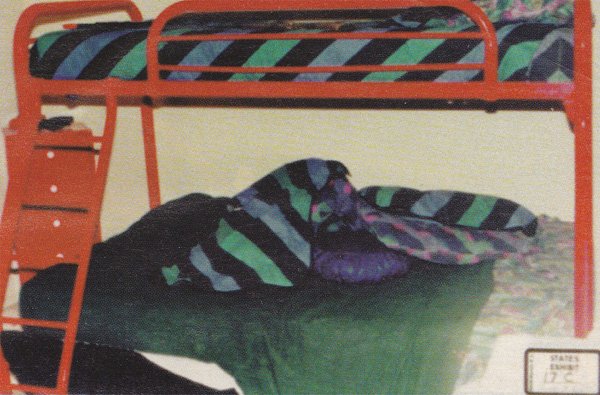
These photographs establish the household setting and show the objects discussed in testimony. The reproduced exhibit numbers are those supplied by the archive. Images are credited beside each plate, with source credits beside each photograph.



The dated procedural record
| Date | Event and legal meaning | Record |
|---|---|---|
| June 6, 1996 | Emergency response at Eagle Drive; Devon and Damon die; Darlie treated. | (Rowlett Police Department) |
| June 14, 1996 | Devon’s birthday gathering at Rest Haven; television footage and separate police surveillance. | (United States Court of Appeals for the Fifth Circuit) |
| June 18, 1996 | Darlie arrested at 10:20 p.m. at Rowlett Police Department. | (Rowlett Police Department) |
| January 6, 1997 | Trial begins in Kerrville; indictment read in Damon’s case. | (Reading of Indictment) |
| January 29, 1997 | Darlie testifies. | (Darlie Lynn Routier) |
| February 1, 1997 | Guilty verdict. | (The Verdict) |
| February 4, 1997 | Punishment verdict and death sentence. | (Verdict on Punishment) |
| February 5, 1997 | Received into TDCJ death-row custody. | (Texas Department of Criminal Justice) |
| March 28, 2001; revised May 4 | Fifth Circuit decision in the family’s civil privacy lawsuit. | (United States Court of Appeals for the Fifth Circuit) |
| May 21, 2003 | Conviction and sentence affirmed on direct appeal. | (Routier 2003) |
| May 17, 2004 | U.S. Supreme Court denies review. | (Supreme Court of the United States) |
| December 1, 2004 | State habeas relief denied. | (Court of Criminal Appeals of Texas) |
| June 18, 2008 | Specified DNA testing authorized on remand; conviction remains in place. | (Routier 2008) |
| August 4, 2014 | Further DNA-testing order reported. | (CBS Texas) |
| November 2018 | Continuing testing confirmed in news report. | (Heinz) |
| October–December 2021 | Further testing and transfer of laboratory findings reported. | (Phillips) |
| November 16, 2026 | TDCJ custody and scheduled-execution lists checked for this article. | (Texas Department of Criminal Justice) |
Open the underlying trial documents
The library links to 102 extracts from the trial, from the indictment through the verdict and punishment. You can look up the people who testified and follow what they said on the stand.
Reader Notes
Add to the story.
Share a memory, correction, lead, or detail that helps the place come into focus.
Leave a note