

On August 4, 1892, Andrew Borden was found dead in his sitting room in Fall River. His wife, Abby, was upstairs in the guest room. Prosecutors charged Andrew’s daughter Lizzie with both murders. The jury heard about a burned dress. No witness or test linked her to a weapon. A jury acquitted her in June 1893. The killings are still unsolved. (Library of Congress; Trial transcript)
The Bordens at 92 Second Street
Andrew Jackson Borden lived at 92 Second Street with his second wife, Abby Durfee Gray Borden, and his two adult daughters, Emma and Lizzie. The girls’ mother, Sarah Anthony Borden, had died when they were young. Lizzie was 32 and Emma was 41. Bridget Sullivan, who was born in Ireland and whom the family called Maggie, lived and worked there. The sisters’ uncle John V. Morse spent the night before the murders in the guest room. (Trial transcript, opening and testimony; LOC guide)
Andrew was a successful businessman who watched his spending. Neighbors and witnesses described differences within the family over money and property. Prosecutors thought those tensions gave Lizzie a reason to kill. The defense argued that the state had supplied a theory of motive and little to show what Lizzie actually did.
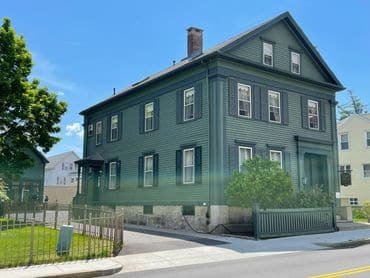
Lizzie and Emma also had lives outside the house. They took part in church work and charitable activities in Fall River. Our photos show the house as it looks on a visit today.
August 4, 1892
Morse left after breakfast. Emma was visiting friends in Fairhaven. Testimony places Andrew, Abby, Lizzie, and Bridget at or around the house at different points that morning. (Trial transcript, Bridget Sullivan and other witnesses)
Andrew came home and was found in the sitting room downstairs. Abby was found in the guest room upstairs. Neighbors came over, and police and physicians were called. The physicians thought Abby had died first, although they gave different estimates of how much time had passed. (Trial transcript, physicians’ testimony)
The two rooms were on different floors. The illustration shows where each person was found.



Investigation and arrest
Police looked at who had been in the house, the tools in the basement, and the family’s clothing. They arrested Lizzie on August 11. A grand jury indicted her in December, and newspapers carried the case well beyond Fall River. (Library of Congress; Chronicling America newspapers)
Lizzie answered questions at the inquest. The trial judges ruled that she was effectively in custody when she gave those answers and that her statements were involuntary. The jury therefore heard the witnesses at trial without hearing Lizzie’s inquest testimony. (Trial transcript, ruling, pp. 830–31)
The two cases put to the jury
The trial opened in New Bedford on June 5, 1893. Prosecutors drew their case from who was home, what witnesses remembered, and what police had collected. Lizzie’s lawyers questioned how those pieces tied her to either killing. (Trial transcript; Library of Congress)
Why suspicion focused on Lizzie
- Who was home. Lizzie was there for part of the morning. Emma was away, and Morse had gone out after breakfast. Prosecutors pointed to the locked doors and the small number of people who could come and go.
- Money and property. Prosecutors described strained relationships and disagreements over family property. These were their reasons for suspecting a motive.
- The dress in the stove. Alice Russell said that six days after the murders she saw Lizzie at the stove with a skirt Lizzie said had paint on it. Russell also saw her tear a small part of the garment. The dress was burned. That left the prosecution with Russell’s account and no garment to test for blood. (Trial transcript, Russell testimony, pp. 391–92)
- The drugstore. Prosecutor William Moody said in his opening that Eli Bence would testify Lizzie had asked for prussic acid the day before the deaths, saying it was for cleaning a sealskin cape. Judges excluded the testimony, so the jury heard only the prosecutor’s preview. (Trial transcript, opening statement and Bence testimony)
- Changes in her account. Later writers found differences in what Lizzie reportedly said about where she was that morning. Several of the statements they quote came from the inquest. The judges kept those answers out of the trial.
- Her demeanor. Some people read Lizzie’s behavior as suspicious. How a daughter was expected to react in 1892 shaped those judgments.
Why the jury could doubt guilt
- No eyewitness. Nobody testified to seeing Lizzie attack Andrew or Abby. The jury had to decide what it could infer from the rest of the evidence.
- The tools. The chemist tested suspect marks on the axes and hatchet and found no blood. He thought the hair associated with the hatchet came from an animal, probably a cow. The tested tools left the jury without an identified weapon. (Trial transcript, Wood testimony, vol. II)
- The clothing. Chemist Edward S. Wood said the marks he tested on a blue skirt and other garments were something other than blood. Officers who searched the house found no bloody clothing they could attribute to Lizzie. (Trial transcript, Wood testimony, vol. II; Medley testimony)
- The timing. Witnesses came and went that morning. Medical evidence suggested Abby died first, but the estimates left room for disagreement about when each attack happened.
- The inquest account was excluded. The prosecution could not place Lizzie’s inquest statements before the jury. The court held them inadmissible under the circumstances of her practical custody. Accounts that treat those statements as trial proof misstate the record.
- Reasonable doubt. Lizzie’s lawyers argued that the dress, the household tensions, and her presence in the house left the prosecution without a direct link to either killing. On both counts the jury found her not guilty.
The evidence witnesses brought to court
Presence and opportunity
The testimony put Lizzie at the house for part of the morning. Emma was in Fairhaven and Morse had left. Prosecutors used that to argue Lizzie had the opportunity. The defense pointed to the gaps in who was watching each room. (Trial testimony)
Household relationships and motive
Witnesses gave the jury a picture of how the family lived and handled money. Prosecutors saw a motive in the disagreements. The defense disputed that any particular quarrel led to the murders.
Burned skirt
Alice Russell remembered Lizzie saying the skirt was marked with paint. Prosecutors saw the burning as suspicious. Russell never reported seeing blood, and the garment was gone before anyone could examine it. (Trial testimony, pp. 391–92)
Axes and hatchet
Wood found no blood on the marks he tested. He believed the hair was from a cow. Prosecutors suggested a tool could have been cleaned. The defense pointed out that the tests tied none of the collected tools to Lizzie or the two deaths. (Trial transcript, vol. II)
Clothing and blood traces
Wood found no blood in the spots tested from the clothing or on Lizzie’s shoes and stockings. The prosecution raised the possibility of changed or washed clothes. The burned dress was unavailable when the chemist did his tests. (Trial transcript, vol. II)
The prussic acid allegation
Moody said an inquiry about poison could suggest preparation. The judges excluded the proposed drugstore testimony. The jury gave its verdict without hearing the witness. (Trial transcript, opening and Bence testimony)
Inquest statements
Lizzie was summoned, watched by police, and questioned without a warning while effectively in custody. The judges unanimously ruled that her inquest statements were involuntary and kept them from the jury. (Trial transcript, ruling, pp. 830–31)
Medical estimates and sequence
Doctors weighed body temperature, stiffness, and the condition of the blood. Their observations put Abby’s death first. As the lawyers questioned them, it became clear how much the estimates could vary. (Trial transcript, physicians’ testimony)
Acquittal, Maplecroft, and the cemetery
On June 20, 1893, the jury acquitted Lizzie of both murders. The question of who killed Andrew and Abby remains open. (Library of Congress)
Lizzie and Emma moved to Maplecroft on French Street after the trial. Our pictures show the house, including the name cut into the stone by the entrance. Maplecroft is private property. The graves are in the Borden family plot at Oak Grove Cemetery.


Location atlas
The Borden House at 230 Second Street
Andrew and Abby were found here when the house was numbered 92. The map uses today’s address, 230 Second Street.
Maplecroft at 306 French Street
Lizzie and Emma moved here after the trial. Maplecroft is private property.
Oak Grove Cemetery at 762 Prospect Street
The Borden family plot is at Oak Grove Cemetery. The cemetery address is on the location card.
Primary documents
Trial record and contemporary sources
Trial of Lizzie Andrew Borden, Volume I. Harry Widdows’s 2003 transcription of Frank H. Burt’s 1893 stenographic report. Includes opening statements, witness testimony, and the inquest ruling.
Trial of Lizzie Andrew Borden, Volume II. The rest of the trial transcript, including Edward S. Wood’s testimony about the tools and clothing.
Library of Congress, Arrest and Trial of Lizzie Borden. Contemporary newspaper coverage and a guide to the dates of the case.
LizzieAndrewBorden.com Primary Sources. The archive’s index of copies of the trial transcript, inquest records, and police statements.
Why the case is still argued
The strongest case for suspicion starts with who was in the house and what happened to the dress. The hardest question for prosecutors was how to tie Lizzie to the attacks. There was no eyewitness, the tools gave them no weapon, and the jury never heard the inquest statements. People still argue over what those facts add up to, as the jury had to do in 1893.

Reader Notes
Add to the story.
Share a memory, correction, lead, or detail that helps the place come into focus.
Leave a note