
Bill Thompson was in his last class of the day at the London School when he asked another fifth grader to trade seats. He wanted to sit closer to a girl. The PTA was meeting in the gym, a separate building, and dismissal was still set for 3:30 p.m. Bill remembered the seat change for the rest of his life. (Bill Thompson’s interview)
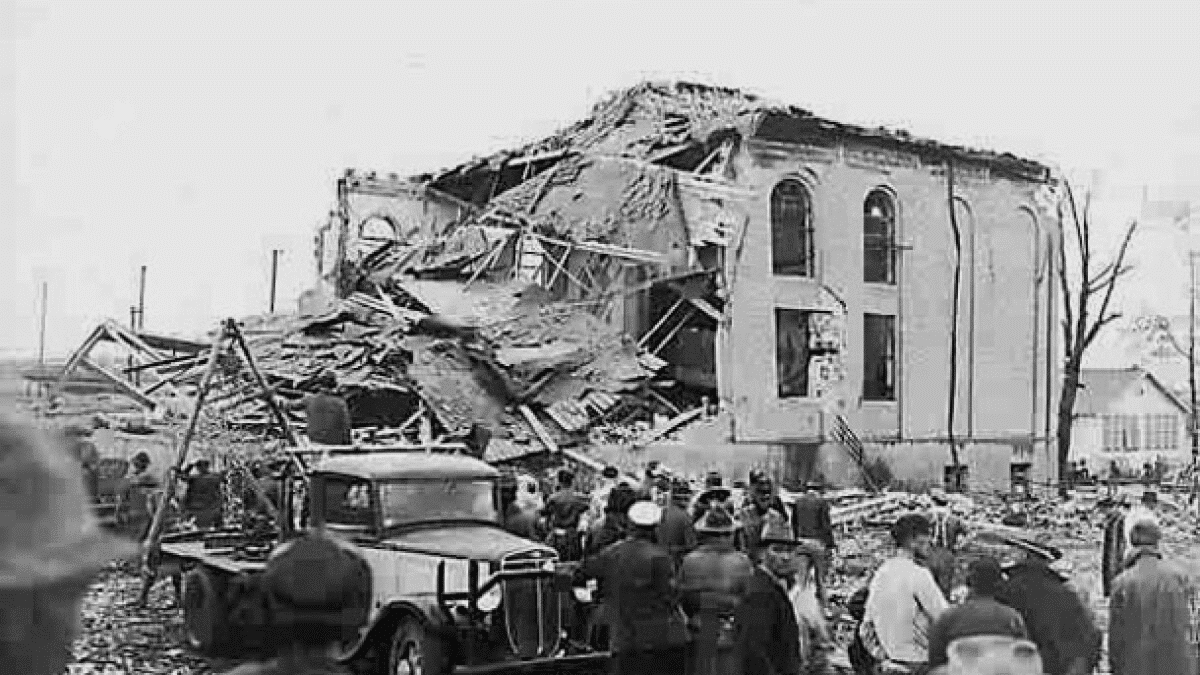
Shortly after three on Thursday, March 18, 1937, the main school building exploded. Federal investigators would trace the destruction to gas that had collected under the classrooms. In New London that afternoon, parents were looking for their children and neighbors were lifting bricks and pieces of the school by hand. (Federal investigation) (Texas inquiry) (Handbook of Texas)
A school built on oil money
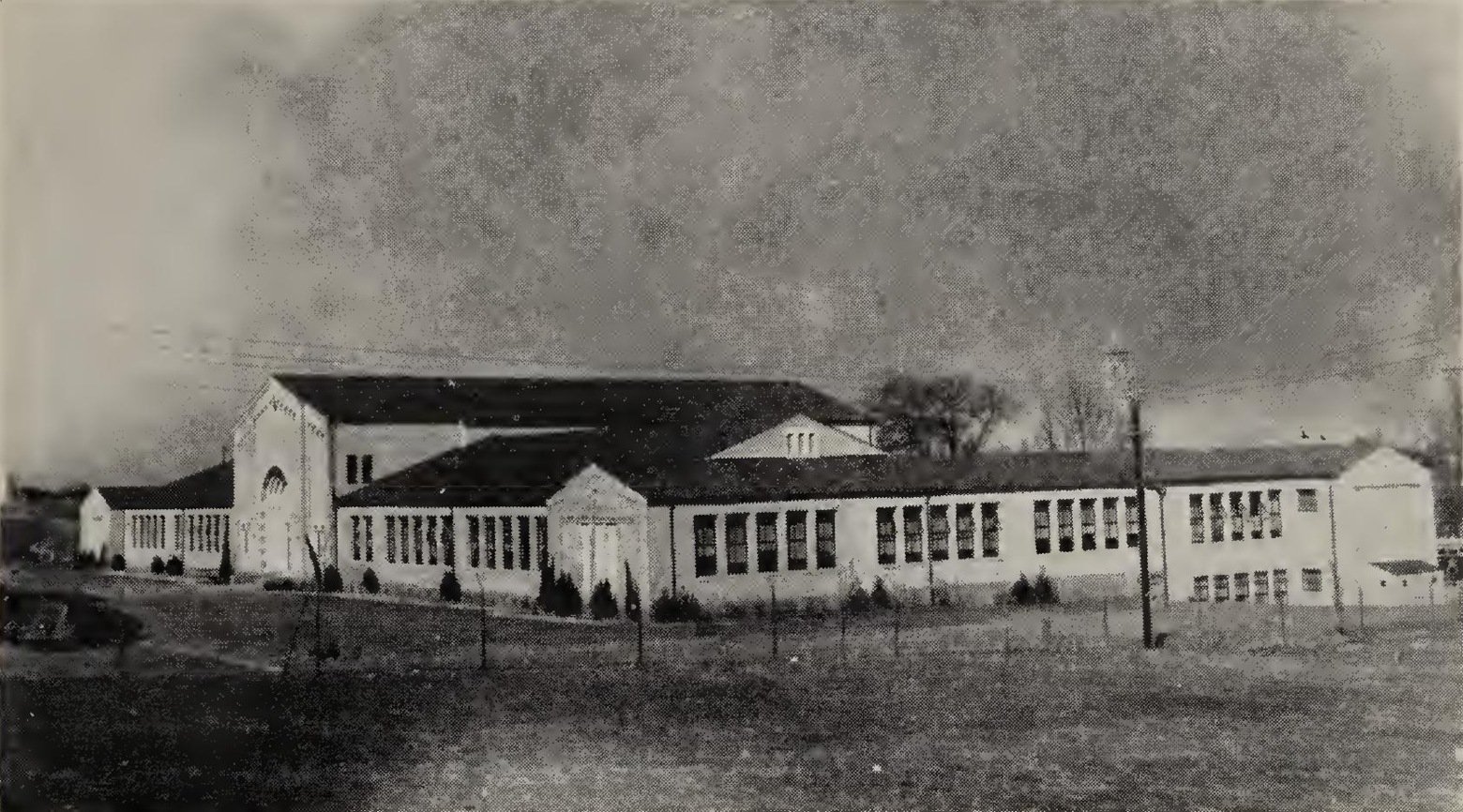
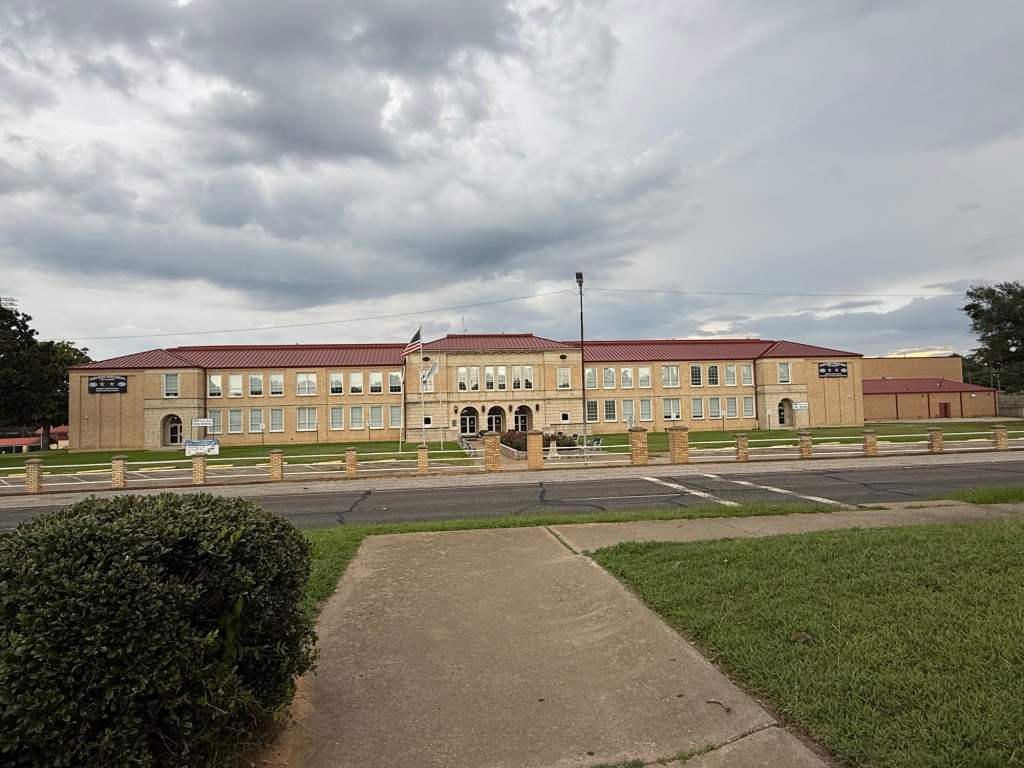
The East Texas oil boom brought families and revenue to the London school district in Rusk County. The district built a brick and steel school with an auditorium between the classroom wings, as well as a separate gym and elementary building. Fifth through eleventh graders studied in the main building. In the spring of 1937, students were getting ready for an Interscholastic League meet in nearby Henderson. (Federal description and photographs) (Handbook of Texas)
Fourteen-year-old Ardyth Davidson played on the school’s champion softball team. She was in eighth grade. Her brother John, born after the explosion, grew up in a family that kept some of her things. He later showed her photograph at the museum across the highway from the school. The memorial roll also records Clifton Shaw, the superintendent’s son, among the students who died that day. (John Davidson’s interview) (Memorial roll) (Handbook of Texas)
The oilfield also changed how the school heated its classrooms. In January 1937, the district stopped buying its regular gas supply and switched to residue gas from a nearby processing line to reduce heating costs. The new supply carried no added warning odor. When gas escaped below the building, people upstairs had little reason to know it was there. (Fuel supply and odor) (Joint committee report)
The last class of the afternoon
Some younger children had already left the campus. Fourth grader Mollie Sealey Ward was on her way home by bus. The older pupils still in the main building were finishing their school day. In the federal report, engineer David J. Price put the explosion at about 3:10 p.m., shortly after the last period began. (Mollie Sealey Ward’s interview) (Price’s account of the afternoon)
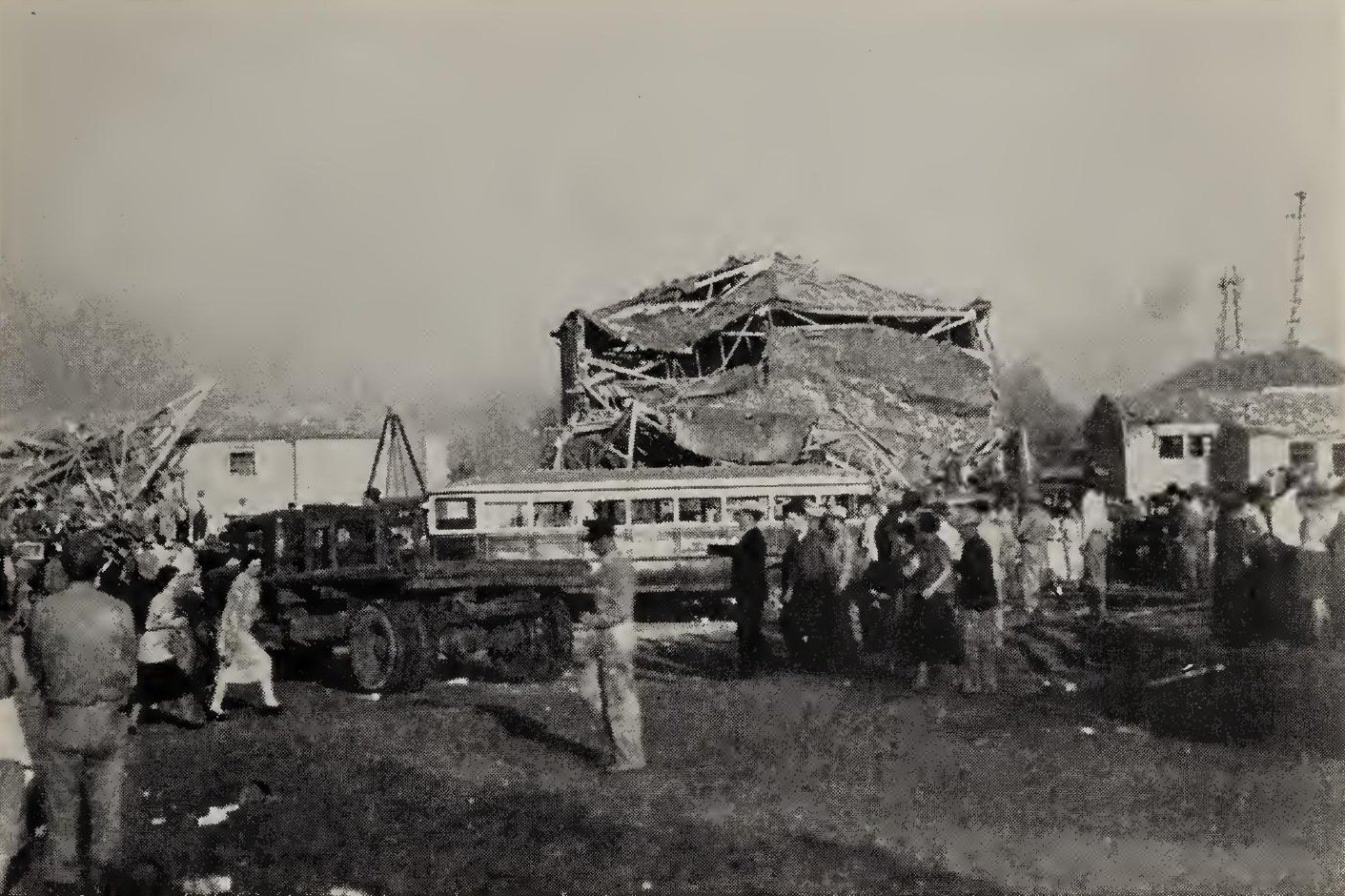
Carolyn Jones and Barbara Moore were in fifth grade. Carolyn remembered their teacher, Mrs. Sory, pushing both girls through a classroom window and climbing out after them. Across the campus, parents in the PTA meeting could come out of the gym and go straight to the wreckage. The auditorium and much of the main building had collapsed. (Carolyn Frei’s interview) (Federal damage survey) (Museum accounts of the rescue)
When Mollie’s bus reached its stop, mothers were waiting and asking about children who were still at school. Ward remembered hearing the mothers call out names. “Have you seen Geneva?” Workers from the oil fields came with equipment to move debris. Families and volunteers searched wherever they could reach. Governor James V. Allred sent in state officers. Floodlights let the work continue through the night, even after it began to rain. (Survivor interviews) (Rescue and recovery) (State archives)
A hospital opens a day early
About 25 miles away in Tyler, Mother Frances Hospital was due to open on Friday. The Sisters of the Holy Family of Nazareth and the hospital staff took in injured people that Thursday instead. In New London, rescuers set aside belongings they found in the rubble. The museum still keeps some of those things, including a black shoe used to identify fifth grader Norma Wayne Roberts. (Hospital history) (Texas Standard’s museum reporting)
Messages came to the governor from beyond Texas. Teachers in San Luis Potosí, Mexico, asked him to pass their condolences on to the teachers and families of New London. The state archives preserve their letter and its English translation. (Teachers’ letter)
What the investigators found
Two days after the blast, a military board appointed by Allred began hearing witnesses. Members of a joint committee of the Texas Legislature attended so witnesses would only have to give that testimony once. State lawmakers later questioned engineers and other specialists under oath. In Washington, the Senate published Price’s investigation for the U.S. Department of Agriculture. A separate federal team from the U.S. Bureau of Mines supplied the findings the Texas committee adopted. (Federal report) (Committee’s account of the hearing)
Both inquiries traced the explosion to gas that leaked into a poorly ventilated space beneath the west side of the main building. Much of the destruction was directly above it. The Bureau of Mines traced the gas to leaking lines or fittings under the school. Its finding allowed for more than one leak and left the exact break unresolved. (Bureau of Mines findings) (Damage and probable cause)
Where the gas collected
1Classroom level. Students were in class above the enclosed space.
2Space below the floor. Gas collected here before the blast.
The shop was the likely point of ignition. Price relied in part on students who reported a flash as shop equipment was being operated. He described an electrical spark as the probable cause. The Bureau of Mines reached a firmer conclusion about a shop switch. Those records support the role of the shop and the gas beneath the floor. The account often told about a particular sander is more specific than Price’s finding. (Price’s conclusion) (Bureau of Mines conclusion)
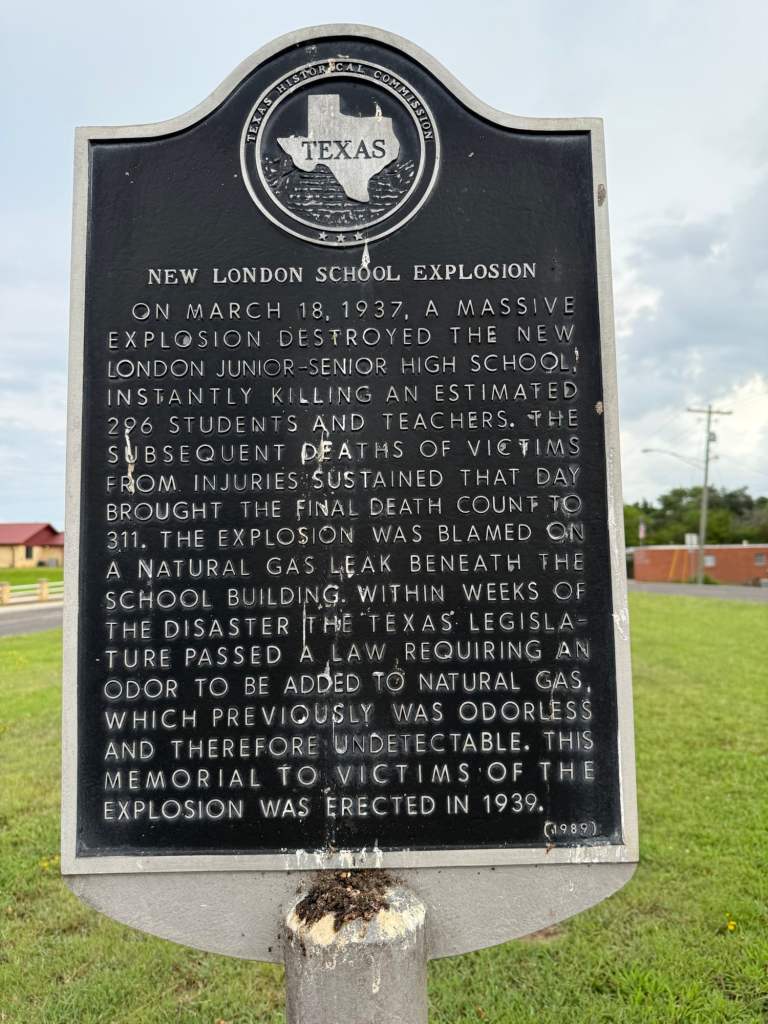
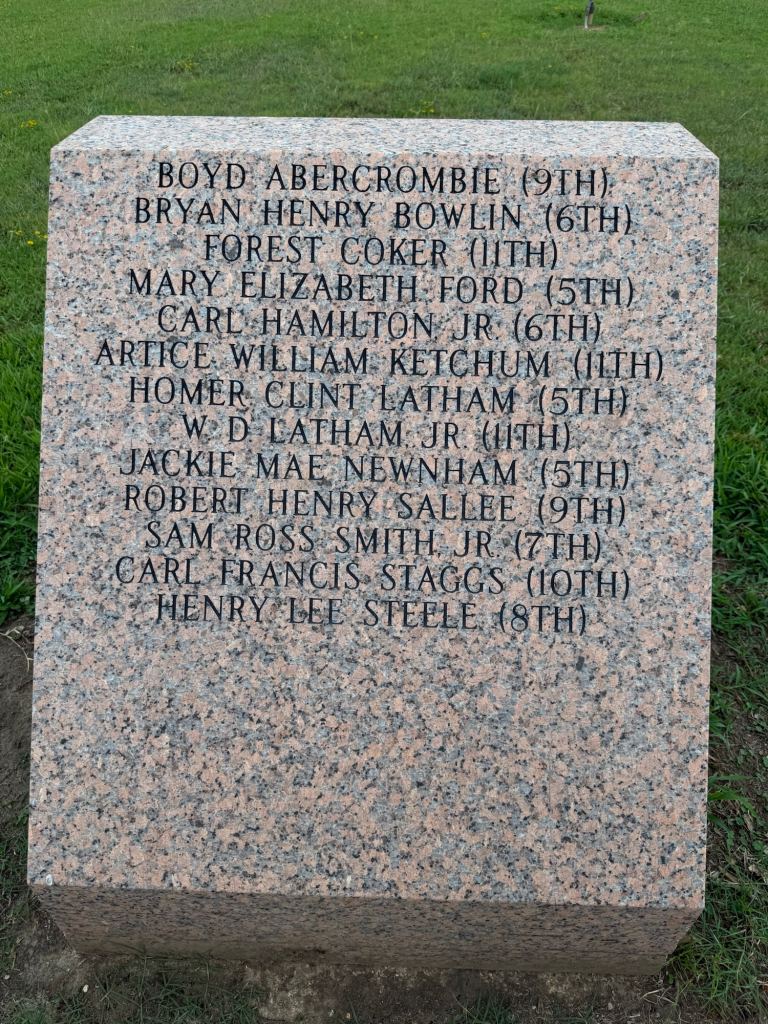
The Texas committee’s report counted 284 pupils and 14 teachers among the dead, for a total of 298. The state marker at the cenotaph estimates 296 immediate deaths and gives a total of 311 after counting later deaths. The names on the memorial show how the loss fell across classrooms and families. At Pleasant Hill Cemetery alone, the Texas Historical Commission records 112 burials connected to the explosion. (Committee’s count) (School memorial marker) (Pleasant Hill marker)
Taking attendance again
Children began coming back to school in temporary classrooms before the end of March. A Fort Worth Star-Telegram photograph dated March 29 identifies five boys back at school, listing one as Billie Thompson. In his interview decades later, Bill remembered the cold gym and a teacher calling out the names in his class. At some names, children answered for classmates who were in the hospital or whose families had moved away. When the teacher reached the girl who had traded seats with him, Bill learned she had died. (March 29 photograph) (Bill Thompson’s interview)
Texas lawmakers gave the Railroad Commission authority over gas odorization and safety under House Bill 1017. On July 27, 1937, the commission issued an order requiring a detectable odor in gas supplied by gas utilities. The new rule addressed a specific problem exposed in New London. People could smell a leak and act before gas reached a dangerous level. On May 28, Allred also signed the law creating a registration board for professional engineers. (House Bill 1017) (Commission records) (Court opinion quoting the July order) (Engineering registration history)
Families also went to court. In January 1938, the Associated Press reported that J. O. Moore’s suit sought damages for the death of his daughter. The Handbook of Texas records more than 70 suits. District Judge Robert T. Brown dismissed the few cases that came to trial for lack of evidence. Public pressure had led W. C. Shaw to resign as superintendent. He had lost his son Clifton in the blast. (January 1938 AP report) (History of the suits)
The names along Highway 42
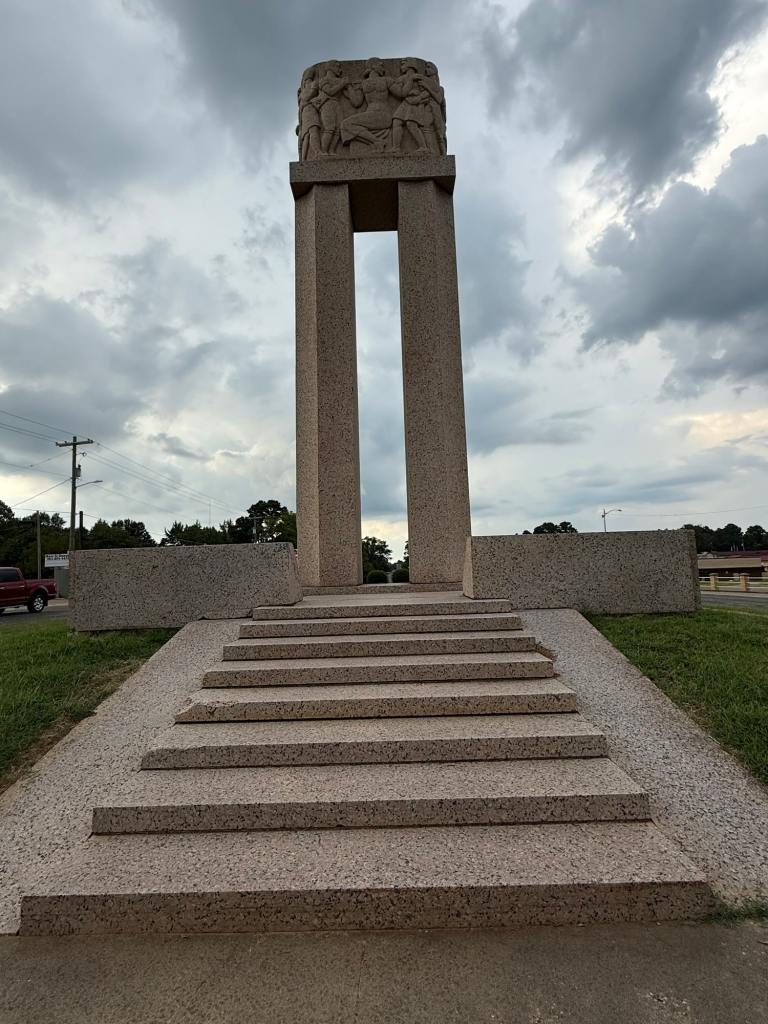
On March 26, 1937, residents met in the elementary school to form a memorial association. Children gave nickels and dimes toward the monument. When the pink granite cenotaph was erected in 1939, it stood in front of the replacement school. Donald S. Nelson designed it, and Herring Coe sculpted the figures. The twelve figures show children bringing homework and gifts to two teachers. Around the base are the names of the people who died. (School district’s account of the monument) (Handbook of Texas)
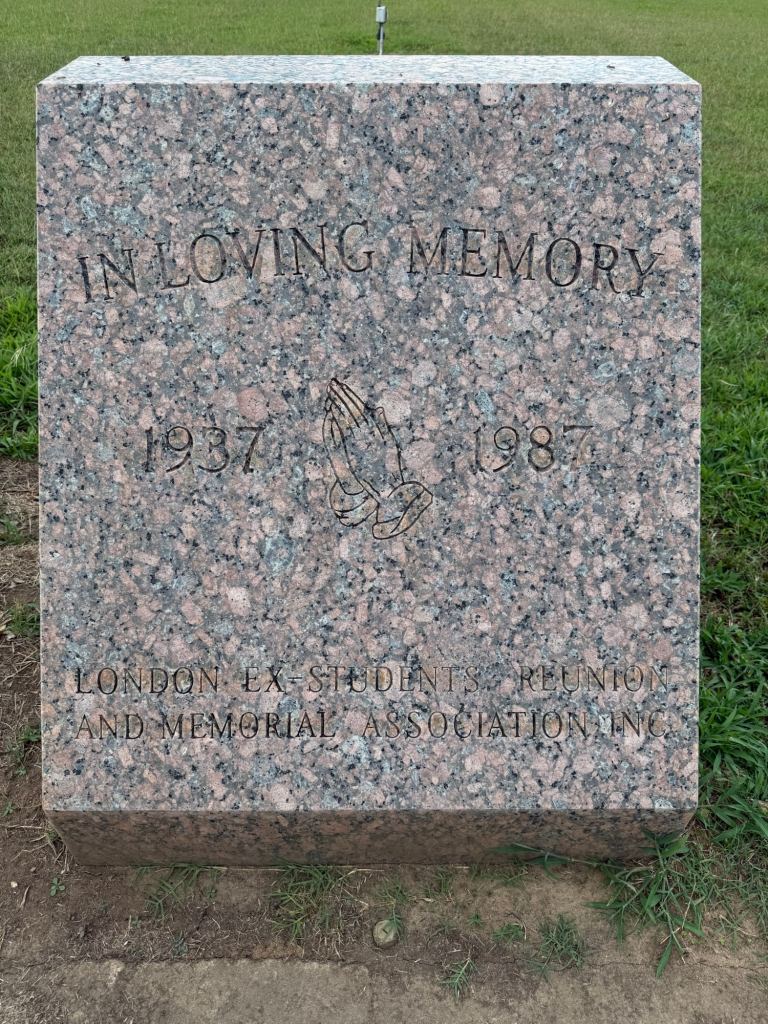
In 1987, former students placed a smaller pink stone for the fiftieth anniversary. Mollie Sealey Ward, the fourth grader who had been riding the bus, helped organize a museum across the road. It opened in 1998 in a former drugstore. Among the pieces families gave the museum is part of the coat Ardyth Davidson wore that Thursday. John Davidson helped tell visitors about his sister there. (Our memorial photographs) (The museum’s history) (John Davidson’s interview)
What the records show
The switch to residue gas
Price documented the district’s January decision to replace purchased gas with residue gas from nearby oilfield processing. It cost less and lacked an added odor.
The new supply is part of the explanation for the lack of warning. The fuel decision alone cannot identify the site of the leak or settle who was legally responsible. (Federal report) (Handbook of Texas)
The space under the classrooms
The Bureau of Mines compared damage across the building and concluded that gas had accumulated in the inadequately ventilated space along the west front.
Investigators attributed the gas to leaks from the school’s lines or fittings. The joint committee’s report describes possible failure points and leaves the exact opening unresolved. (Bureau of Mines findings) (Damage survey)
The electrical source
Students told the investigators of a flash when shop equipment was being used. Price treated the electrical source as probable.
The Bureau of Mines identified a shop switch as the source of ignition. Price’s report uses more cautious language about the specific source. (Probable cause) (Bureau of Mines conclusion)
The time of the explosion
Price placed the blast at about 3:10 p.m. The Texas joint committee recorded approximately three in the afternoon.
Bill Thompson remembered students being told to expect the regular 3:30 dismissal. The accounts put the explosion in the last part of the school day. (Initial chronology) (Committee summary) (Bill Thompson’s interview)
Counting the dead
The committee reported 284 pupils and 14 teachers. The state marker estimates 296 immediate deaths and 311 after later deaths.
The district’s 1989 history describes the cenotaph as a memorial to 293 people, including students, teachers, and visitors. That number describes the memorial’s roll. (1939 count) (State marker) (School district history)
What the rescue left behind
The hospital’s history records its opening a day early to take the injured. In New London, people set aside belongings recovered during the search.
The museum keeps the town’s telephone switchboard and items that helped families identify children, including Norma Wayne Roberts’s shoe. (Hospital history) (Interviews at the museum)
The damages suits
In the AP account of J. O. Moore’s lawsuit, a parent sought compensation for his daughter’s death. The filing made allegations about how the gas reached the school.
The Associated Press named the school district and former superintendent among the defendants. Historian Irvin May records that the suits that reached trial were dismissed for lack of evidence. (AP report) (History of the litigation)
The warning odor
House Bill 1017 gave the Railroad Commission the authority to act. The commission’s July order required gas companies to add a warning odor.
A later Texas appellate opinion quotes that order in a case involving a different gas explosion. (House Bill 1017) (Commission minutes finding aid) (Appellate opinion)
No evidence entries match that search.
The places in this story
The London Museum, cenotaph, and school
The museum is at 10690 Main Street on the west side of Highway 42. The cenotaph stands in the median. We photographed the school campus from across the highway. The map and directions below use the museum address. (Texas travel guide) (Museum and school) (Our location photographs)



Cases near this location
Showing cases with mapped locations within 50 miles of this stop.

Pleasant Hill Cemetery
The cemetery lies on State Highway 323 west of Henderson. Its own historical marker records 112 people buried here who died in the explosion. (Cemetery marker and location)
Mother Frances Hospital
The hospital in Tyler took in injured children and adults on March 18, a day ahead of its scheduled opening. (Hospital history)
Reports, records, and interviews
Explosion at Consolidated School, New London, Tex.
David J. Price’s account of the damage, witness testimony, and likely cause. The report includes the two archival photographs shown here. (Full citation)
Interim Report under House Concurrent Resolution No. 70
The joint committee’s report reproduces the Bureau of Mines findings and records the committee’s death count. (Full citation)
New London School Explosion
Photographs, correspondence, and the account of how Texas began registering professional engineers. (Full citation)
House Bill 1017
The bill record gives the enactment history for the law that authorized gas odorization rules. (Full citation)
Houston Natural Gas Co. v. Kluck
The opinion reproduces the Railroad Commission’s July 27, 1937, odorization requirement. (Full citation)
New London Explosion Suits Set for Trial
An Associated Press dispatch names J. O. Moore and describes his claim over his daughter’s death. (Full citation)
Survivors of the New London School Explosion
The archive identifies five boys pictured as students were returning to school. (Full citation)
Oh, My God! It’s Our Children!
Bill Thompson, Carolyn Frei, Mollie Sealey Ward, and other survivors recall the school day and its aftermath. (Full citation)
List of Names
The list of students gives readers a way to find a name from the school or memorial. (Full citation)
Cenotaph Commemorates Memory of Those Who Died in London School Blast March 18, 1937
The district records the schoolchildren’s contributions, the design, and the work of the memorial association. (Full citation)
No records match that search.
Works Cited 19 sources
- “List of Names”. New London Texas School Explosion. Accessed 19 Nov. 2026.
- Associated Press. “New London Explosion Suits Set for Trial”. Pampa Daily News, 10 Jan. 1938, p. 5. Southwest Collection, Texas Tech University. Accessed 19 Nov. 2026.
- CHRISTUS Health. “CHRISTUS History”. CHRISTUS Health. Accessed 19 Nov. 2026.
- Fort Worth Star-Telegram. “Survivors of the New London School Explosion”. Fort Worth Star-Telegram Collection, 29 Mar. 1937. University of Texas at Arlington Libraries. Accessed 19 Nov. 2026.
- Gaddis, Aislyn. “A Tiny East Texas Museum Makes Sure the History of the London School Explosion Is Not Forgotten”. Texas Standard, 13 Aug. 2024. Reprinted by Texas Public Radio. Accessed 19 Nov. 2026.
- May, Irvin. “New London School Explosion”. Handbook of Texas, Texas State Historical Association, revised 9 June 2020. Accessed 19 Nov. 2026.
- McDonnold, Paul. “The New London Museum Recalls the Most Deadly School Tragedy in U.S. History”. Texas Highways, Aug. 2019. Accessed 19 Nov. 2026.
- Price, David J.. Explosion at Consolidated School, New London, Tex.. U.S. Senate, 75th Cong., 1st sess., Senate Doc. 56, 1937. National Agricultural Library. Accessed 19 Nov. 2026.
- Railroad Commission of Texas. “An Inventory of Railroad Commission of Texas Minutes at the Texas State Archives”. Texas Archival Resources Online, Texas State Library and Archives Commission. Accessed 19 Nov. 2026.
- Texas Department of Transportation. Texas State Travel Guide 2026. Texas Department of Transportation, 2026. Accessed 19 Nov. 2026.
- Texas Historical Commission. “New London School Explosion”. Texas Historic Sites Atlas, marker no. 11023. Accessed 19 Nov. 2026.
- Texas Historical Commission. “Pleasant Hill Cemetery”. Texas Historic Sites Atlas, marker no. 11047, 1980. Accessed 19 Nov. 2026.
- Texas State Library and Archives Commission. “New London School Explosion”. Extra! Extra! Eyes of the World on Texas. Accessed 19 Nov. 2026.
- Texas. Court of Civil Appeals. Houston Natural Gas Co. v. Kluck. South Western Reporter, Second Series, 154 S.W.2d 504, 1941. Reproduced by Counsel Stack. Accessed 19 Nov. 2026.
- Texas. Legislature. House Bill 1017. Legislative Reference Library of Texas, 45th Legislature, regular session, ch. 364, 1937. Accessed 19 Nov. 2026.
- Texas. Legislature. Joint Committee on the New London School Explosion. Interim Report under House Concurrent Resolution No. 70. House Journal, 46th Legislature, 1939, pp. 187–192. Legislative Reference Library of Texas. Accessed 19 Nov. 2026.
- To the Place. “Our New London Photographs”. To the Place, Our location collection, first published 15 Oct. 2025. Accessed 19 Nov. 2026.
- Vine, Katy. “Oh, My God! It’s Our Children!”. Texas Monthly, Mar. 2007. Reprinted as “The New London School Explosion” by the memorial site. Accessed 19 Nov. 2026.
- West Rusk County CISD. “Cenotaph Commemorates Memory of Those Who Died in London School Blast March 18, 1937”. New London Texas School Explosion, Jan. 1989. Accessed 19 Nov. 2026.
Reader Notes
Add to the story.
Share a memory, correction, lead, or detail that helps the place come into focus.
Leave a note