

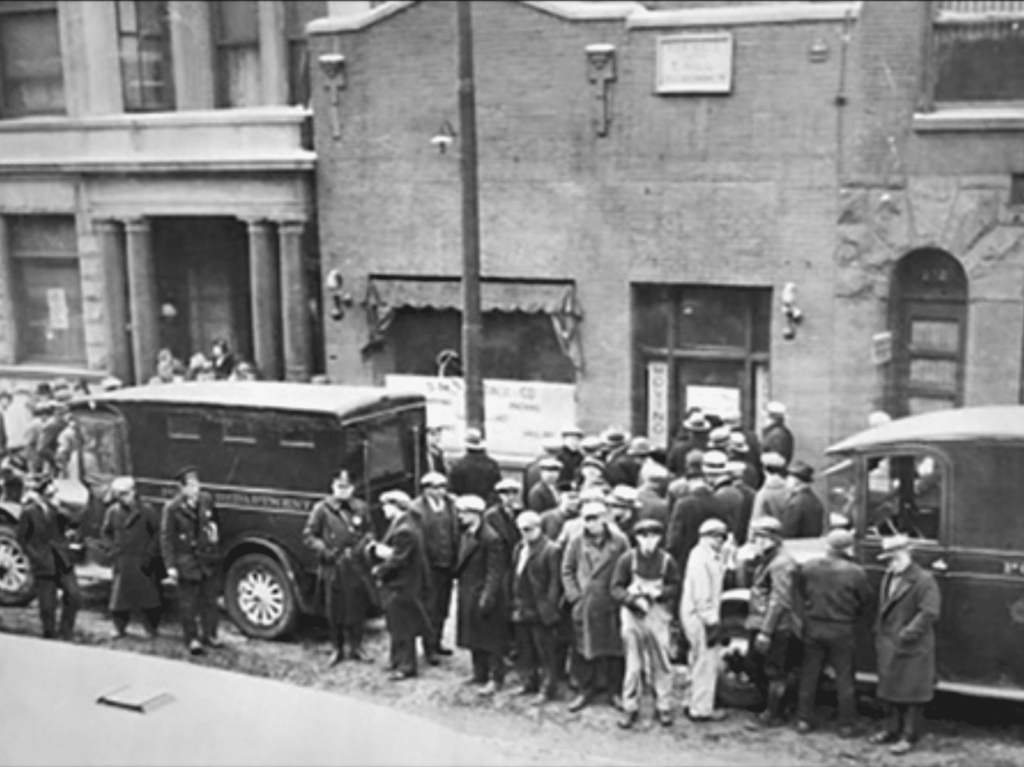
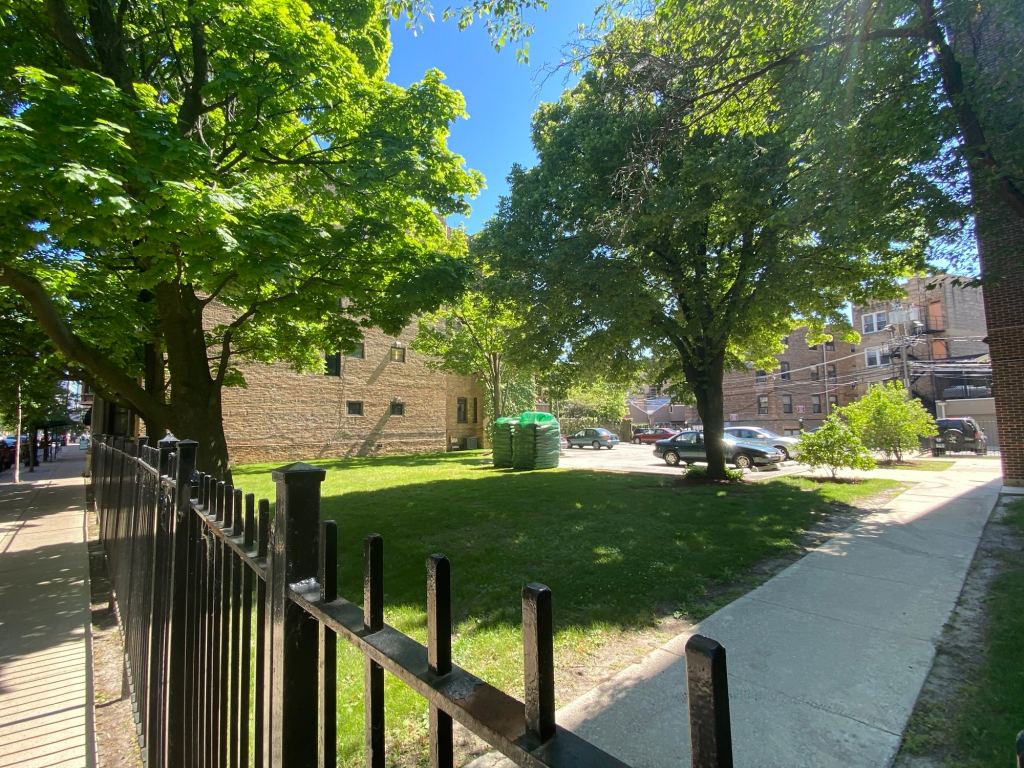
In our photo of 2122 North Clark Street, a black fence follows the sidewalk and trees shade the lawn. A brick garage once stood there. The sign in its window read S.M.C. Cartage Company. On February 14, 1929, six men died inside the garage and a seventh, Frank Gusenberg, died after police found him alive. The Chicago Daily News put the killings on its front page that day. The next morning, the Tribune printed six of the men’s portraits together. (Our North Clark Street photographs) (Chicago Daily Tribune, February 15) (Associated Press, February 14) (Gusenberg homicide entry)
The seven men at the garage
John May
May was 35 and worked as a mechanic. He did repair work for Moran’s operation, and police recorded that he was married. The Mob Museum identifies the German shepherd in the garage as May’s dog, Highball. In the Tribune the next day, a uniformed patrolman held the dog for a photograph. (May homicide entry) (Police report reproduced by the Tribune) (Mob Museum) (Period photograph)
Reinhardt Schwimmer
Schwimmer was an optometrist, 29. His mother, Josephine, told the coroner that she saw him every day and had been helping him while he looked for a new office. He had sold Moran glasses and gone to baseball games with him. Those are the details she brought to the inquest when she was asked about her son’s association with the men on Clark Street. (Schwimmer homicide entry) (Josephine Schwimmer’s inquest testimony as reported by the Sun-Times)
Adam Heyer
Police listed Heyer as a married accountant, age 40. The Tribune identified him as the man who rented the garage. The garage he rented was one of the places Moran’s people used. (Police report reproduced by the Tribune) (February 15 photograph captions)
Albert Weinshank
Weinshank worked in cleaning and dyeing and was married. The Tribune described him as a recent recruit to Moran’s group. His police entry is filed under Albert Weinshank, although some early reports printed his first name as Alfred. (Weinshank homicide entry) (Occupations in the police report) (February 15 photograph captions) (Washington Daily News, February 15)
Albert Kachellek
The police report listed Kachellek, who used the name James Clark, as married. The Tribune identified him as related to Moran by marriage. The first Associated Press dispatch carried the name Clark, which also appears beneath his photograph in the paper the next day. (Police report and archival captions) (Associated Press, February 14) (February 15 photograph captions)
Peter and Frank Gusenberg
The police entry gives Peter’s age as 40 and Frank’s as 36. The Tribune called Peter one of Moran’s lieutenants. Police recorded Frank as married. Peter died in the garage. Frank was taken to the hospital and died later that day. Their brother Henry was photographed leaving the state’s attorney’s office. The two funerals were held together on February 18. (Gusenberg homicide entry) (Tribune photographs of the brothers) (Police report and funeral photograph)
From State Street to North Clark
National Prohibition took effect in 1920. Brewing beer and selling it to saloons became an illegal business, and Chicago’s suppliers fought over the same customers and territory. Dion O’Banion used a flower shop across from Holy Name Cathedral. After his death in 1924, Earl “Hymie” Weiss used rooms above the shop. Weiss and Patrick Murray were killed on the same block in 1926. (Eighteenth Amendment) (Our account of Weiss and Murray) (Citation) (FBI history of Capone)
By 1929, George “Bugs” Moran led the North Side gang. Trucks, storage, accounting, and repairs all mattered to the beer business. The garage on North Clark was one of the places his people used. The Tribune photographed the building with its garage sign still in the window. (Tribune photograph of the garage) (The North Side operation) (FBI history of Capone)
Thursday morning on Clark Street
The homicide ledgers put the shooting at 10:40 a.m. Inside the Cartage garage, the men were found along a brick wall. The first Associated Press dispatch said a woman living nearby had called police. Officers found six men dead and Frank Gusenberg wounded. The February 15 Tribune photograph page records that he died after he was taken from the garage. (Gusenberg homicide entry) (May homicide entry) (Associated Press, February 14) (February 15 photographs)
Alphonsine Morin lived across the street. As the Tribune later recounted her account, she heard gunfire and saw men who looked like policemen leaving the garage. The newspaper published her picture the next day, alongside another neighbor. The uniforms gave detectives a question they would have to sort out with the coroner. (The witnesses in the Tribune) (Morin photograph and account) (Inquest reporting, April 14)
Moran survived. The later account that he turned away after seeing what looked like a police car comes from reconstructions of the morning. In the first days, many suspected Capone’s organization. Capone gave an interview from his home in Miami Beach and denied involvement. A typed affidavit preserved in a separate federal case records that he was questioned in Florida on February 14. (Moran’s reported movements) (Capone interview, February 18) (Dade County affidavits) (FBI history of Capone)
What the coroner asked
Cook County Coroner Herman N. Bundesen convened a jury. Newspapers photographed the jurors at the Hudson Avenue police station on February 15. The Evening Star reported that federal Prohibition official Fred D. Silloway even suspected serving police officers. In April, firearms examiner Calvin Goddard questioned the police chiefs of Cicero and Melrose Park about weapons their departments held. His comparisons later excluded the police firearms examined. (Inquest photographs) (Associated Press, February 15) (Sunday Star, April 14) (National Institute of Justice)
Detectives booked several men in February. The police ledger records that John Scalise was booked and indicted in March. In May he was found dead, and the case against him was closed later that month. (Weinshank homicide entry) (Schwimmer homicide entry) (Mob Museum case history)
The inquest helped start a laboratory. Two jurors, Bert Massee and Charles Olson, supported establishing the Scientific Crime Detection Laboratory, which became affiliated with Northwestern in 1929. Goddard directed it. Its work soon extended beyond firearms to other kinds of physical evidence. (Northwestern laboratory history) (National Institute of Justice)
The entry for Albert Weinshank records that the case against Jack McGurn, listed there as John, was dropped on December 2. (Weinshank homicide entry)
See the newspaper’s reconstruction
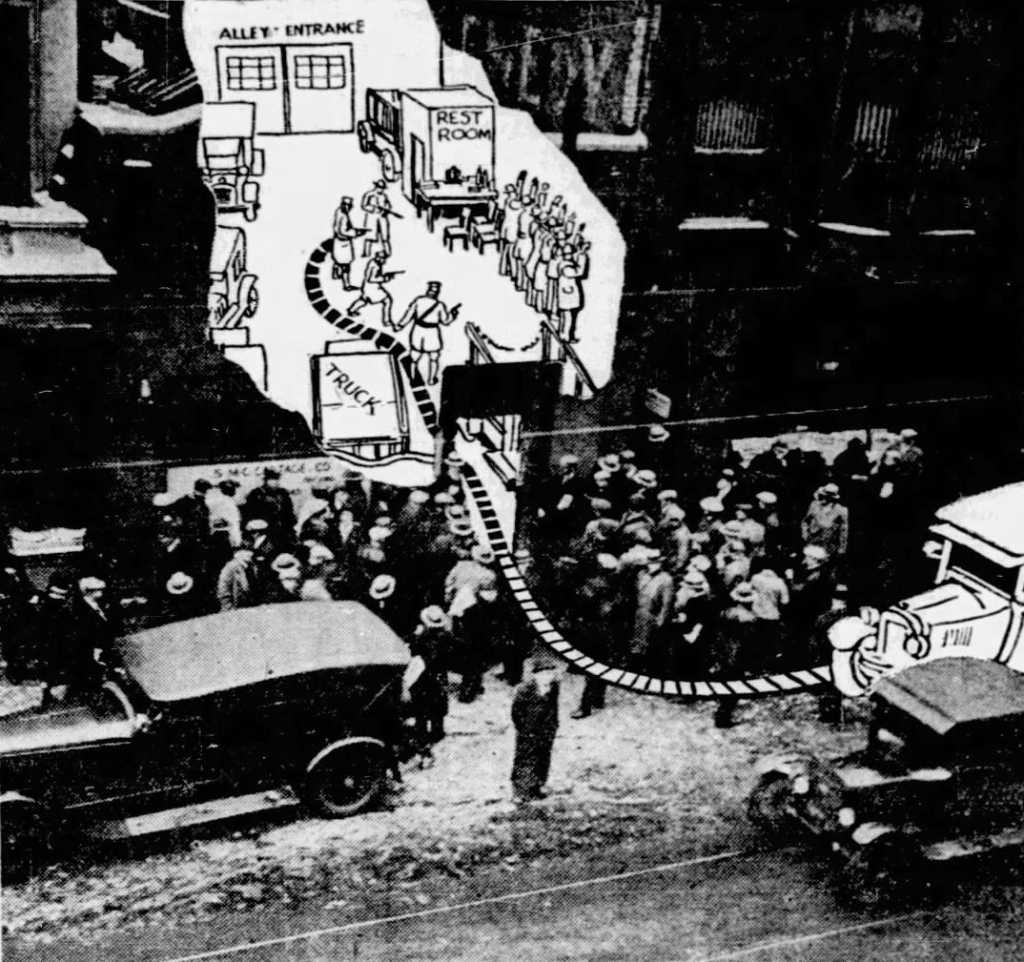
The December discovery in Michigan
On December 14, St. Joseph patrolman Charles Skelly stopped to deal with a traffic collision. The driver who shot him fled. Investigators followed papers in the abandoned car to a man using the name Fred Dane. Fingerprints identified him as Fred Burke. In the house where he had been living near Stevensville, officers recovered two firearms that investigators compared with evidence from Chicago. (Berrien County Sheriff’s Office) (Archives of Michigan) (Weinshank homicide entry)
On December 23, Goddard told the reconvened coroner’s jury that marks on test bullets and cartridge cases from the two firearms matched evidence from the garage. The Associated Press called the markings “identical.” United Press described them as “very similar” and reported the comparison of a bullet recovered from James Clark, the name Kachellek used. That was a direct link between physical evidence in Chicago and the guns seized in Michigan. The identities of the men in the garage that morning remained a separate question. (Associated Press, December 23) (United Press, December 23) (The recovered evidence)
Officers arrested Burke in rural Missouri in March 1931. Michigan obtained extradition. On April 27 Burke pleaded guilty to second-degree murder in Skelly’s death and received a life sentence. An Associated Press report that spring said the Chicago coroner’s jury had named him in the massacre. His prison record shows what the Michigan court decided. He entered the Marquette prison under the name Fred Dane. (Berrien County Sheriff’s Office) (Associated Press, March 27, 1931) (Michigan prison records)
What came out in the years afterward
Capone’s federal trial took place in 1931. Jurors found him guilty on five income tax counts, and Judge James H. Wilkerson sentenced him to eleven years. The Seventh Circuit affirmed the tax convictions. Those court papers concern Capone’s income and returns. His alleged role in the North Clark Street killings remained untried. (Treasury investigator’s report) (Capone v. United States)
In 1935 the press reported that federal investigators had obtained a confession about the massacre. Bureau director J. Edgar Hoover disputed the reports in a February 11 letter. A memo Hoover sent to Acting Attorney General Joseph B. Keenan on August 27, 1936, records an account by Byron Bolton. Bolton named Burke and other men as gunmen and attributed the planning to members of Capone’s organization. He described badges, while Morin remembered what looked like police uniforms. Bolton denied taking part in the shooting. His account remained in the investigative file, and the Chicago cases ended without a conviction. (Hoover’s February 1935 letter) (Hoover’s August 1936 memo)
The crime lab stayed at Northwestern until 1938, when the City of Chicago bought it. The garage later housed Werner Storage. Chicago acquired the property after the company moved out and the building came down in 1967. George Patey obtained bricks from the wall and had them shipped to Canada. About 300 are on display at the Mob Museum in Las Vegas. (Northwestern laboratory history) (Reporting on the demolition) (The wall’s provenance)
Decades after the garage was gone, staff at the Cook County Medical Examiner’s Office found the seven autopsy reports and gathered them with the inquest transcripts. The Sun-Times reported the discovery in 2016. At the end of Schwimmer’s handwritten report, it found four words about what would happen next. “I will bury remains.” (Cook County records reported by the Sun-Times)
The evidence and the leads
The address and the time
Four police entries put the shooting inside the Cartage garage at 2122 North Clark Street at 10:40 a.m.
The Tribune’s photograph page and the first wire report independently print the same street address. (May entry) (Weinshank entry) (February 15 photographs) (First AP dispatch)
A witness across Clark Street
The Tribune identified Alphonsine Morin as one of the women who saw people leaving the garage. She described men who looked like policemen.
The clothing prompted the coroner’s jury to ask about police firearms. The February 15 photo page identified two neighbors as witnesses. (Witness photographs) (Morin’s account) (April inquest report)
Frank Gusenberg reached the hospital
The first AP dispatch named Frank as wounded. The next day’s Tribune said he died later of his wounds.
The ledger groups him with his brother Peter in the same homicide entry. (First AP dispatch) (February 15 photographs) (Gusenberg entry)
The comparison in December
Goddard reported matching marks on test evidence from the guns found in Michigan and evidence from the garage. United Press described the comparison with a bullet from Kachellek, recorded as James Clark.
The comparison linked the recovered guns to the killings. Burke’s prison record is for the death of Charles Skelly in Michigan. (AP account of Goddard’s testimony) (UP account) (Michigan prison record)
Charges in Chicago
The police entry records Scalise’s indictment and the closing of his case after his death. It also records the dismissal in McGurn’s case.
The Chicago cases ended without a conviction in the deaths at the garage. (Schwimmer entry) (Weinshank entry)
Capone’s whereabouts
A signed statement copied into a federal file says Capone was questioned in Florida on February 14. Capone also told a reporter he was retired.
His whereabouts were documented in the separate contempt inquiry. His later convictions were for federal income tax offenses. (Dade County affidavits) (Capone interview) (Tax appeal)
Bolton’s account
A 1936 Bureau memo records Bolton naming Burke and other men and attributing the plan to Capone’s organization.
Hoover’s earlier letter addresses reports that an unnamed person had confessed. The two documents show what the Bureau said publicly and what it later recorded for the Justice Department. (Hoover’s letter, 1935) (Hoover’s memo, 1936)
The bricks
George Patey removed bricks before the garage was demolished. About 300 are now on display in Las Vegas.
The museum notes that previous owners painted the marks on some bricks to make them stand out. (The Mob Museum’s exhibit record) (Demolition reporting)
No evidence entries match that search.
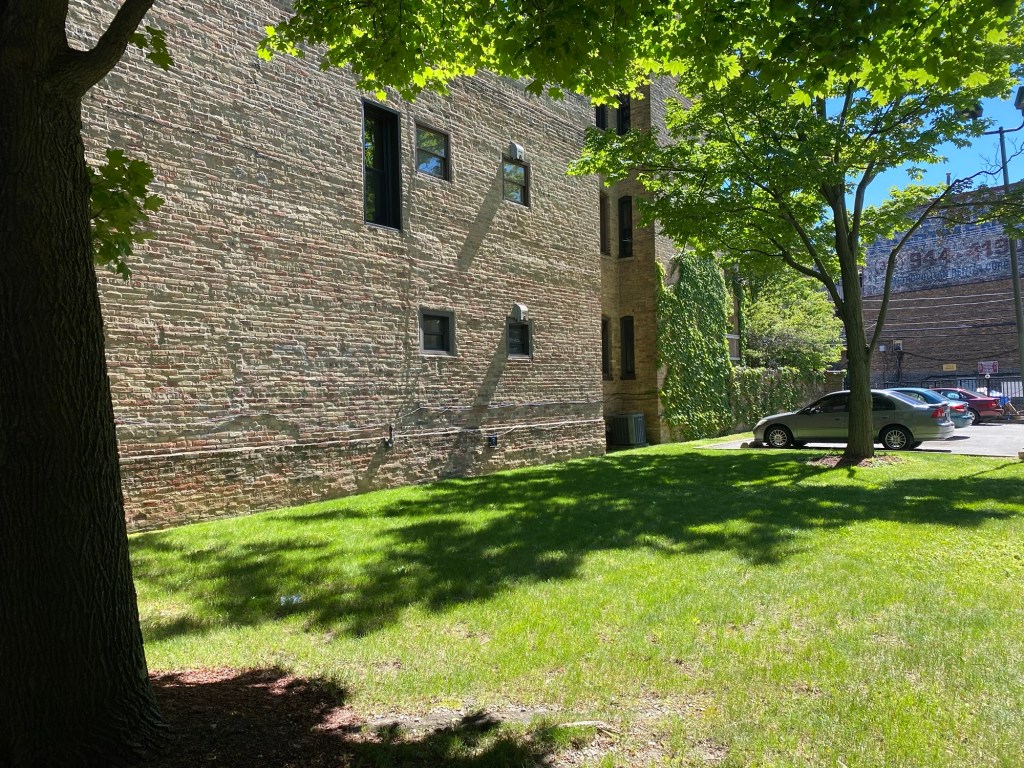
The garage then and now
2122 North Clark Street
A marks the garage frontage in a period photo. B marks the former garage site in our view from the sidewalk. The views are from different angles. (February 15 photo page) (Demolition reporting)


Cases near this location
Showing cases with mapped locations within 50 miles of this stop.
 The Violent Death of John Dillinger
Spot John Dillinger was killed
 When Toys Turn Deadly: The Enduring Terror of Child's Play
Karen Barclay's apartment building
 The Killings of Hymie Weiss and Patrick Murray
Crime Scene in The Killings of Hymie Weiss and Patrick Murray
 The Night Richard Speck Murdered Eight Nurses in Chicago (July 13–14, 1966)
Built in 1882 as a luxury apartment building, the structure's distinctive…
 Shame at the Diamond: The 1919 Black Sox Scandal
Grave / Memorial in Shame at the Diamond: The 1919 Black Sox Scandal
 William Heirens: The 1946 Lipstick Killer Who Haunted Chicago
Frances Brown's apartment. Frances Brown died here on December 11, 1945.
 Tragedy on the Waters: S.S. Eastland Disaster
Historic / Notable Site in Tragedy on the Waters: S.S. Eastland Disaster
 Three Boys, One Tragedy: The 1955 Chicago Murders That Shocked a City
Loop theater then and more recently. We had to use a Google Maps photo of…
 Married With Children
Married with Children fountain from opening credits
 John Wayne Gacy and Timothy McCoy: A Tragic Encounter at a Chicago Bus Terminal
Greyhound Bus Station where John Wayne Gacy picked up Timothy McCoy
 Shaking off tragedy, Our Lady of the Angels Church
The original school building that was destroyed in the fire was completel…
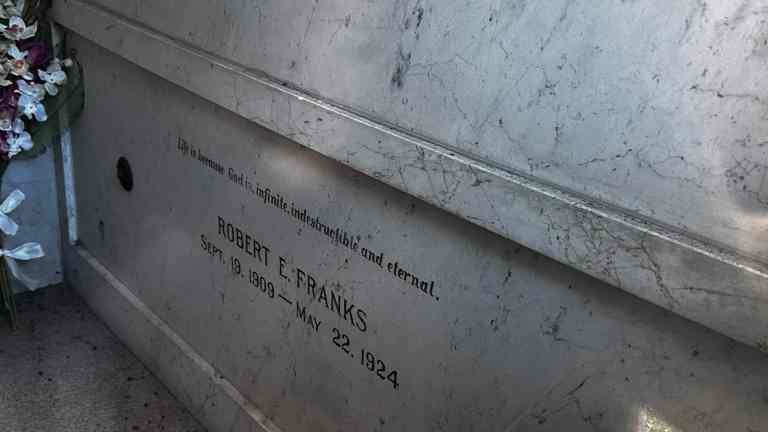 The Horrific Murder of Bobby Franks
Bobby Franks Grave
Hudson Avenue police station
Chicago. The coroner’s jury and the questioning of Josephine Schwimmer were photographed here on February 15, 1929. (Inquest photographs)
St. Joseph and Stevensville
Berrien County, Michigan. Skelly was killed in St. Joseph and officers recovered the firearms near Stevensville. (Berrien County Sheriff’s Office) (Archives of Michigan)
The Mob Museum
Las Vegas, Nevada. The museum exhibits original bricks from the garage wall on its third floor. (Exhibit record)
Police records, newspapers, and federal files
Seven of Moran Gang Lined Up Against Wall in Own Headquarters and Killed by Rivals’ Machine Guns
The February 15 photo page identifies six victims and two witnesses and shows the garage. (Full citation)
Gusenburg, Frank
This entry names Frank and Peter Gusenberg and records the criminal proceedings that followed. (Full citation)
May, John
May’s entry gives the time and address and distinguishes the Chicago investigation from Burke’s sentence in Michigan. (Full citation)
Schwimmer, Reinhardt
Schwimmer’s entry records the indictment of John Scalise and the disposition after Scalise’s death. (Full citation)
Weinshank, Albert
The entry records the dismissal of McGurn’s case and the recovery of the firearms in Michigan. (Full citation)
Seven Massacred as Five Posing as Officers Line Up Gangmen and Fire
An early report printed the Cartage Company address and named the first victims identified. (Full citation)
Police Quizzed in Gang Massacre
Reporters describe questions Goddard directed at two suburban police chiefs. (Full citation)
Burke Gun Held Used in Massacre
The Associated Press account of Goddard’s evidence at the reconvened inquest. (Full citation)
Bullets Link Killer Burke to Massacre
United Press reported the comparison with a bullet removed from James Clark. (Full citation)
[Typed Copies of the Miami Affidavits in the Capone Contempt Inquiry]
Typed copies of the affidavits concerning Capone’s whereabouts and health during the contempt inquiry. (Full citation)
Michigan and the St. Valentine’s Day Massacre
The prison sheet shows Fred Dane as the name under which Burke entered Marquette. (Full citation)
Capone v. United States
The Seventh Circuit’s decision upholding Capone’s convictions on federal income tax charges. (Full citation)
[Letter to the chief of police, Tucson, Arizona]
Hoover’s answer to a police chief asking about newspaper reports of a confession. (Full citation)
[Memorandum to Acting Attorney General Joseph B. Keenan on Byron Bolton’s account]
The memo to Joseph B. Keenan summarizes what Byron Bolton told the Bureau. (Full citation)
No records match that search.
Works Cited 30 sources
- “Fear Seals the Lips of Those Who Saw Chicago Killers”. The Washington Daily News, 15 Feb. 1929, p. 4. Library of Congress scan reproduced by Mob Files. Accessed 18 Nov. 2026.
- “Seven of Moran Gang Lined Up Against Wall in Own Headquarters and Killed by Rivals’ Machine Guns”. Chicago Daily Tribune, 15 Feb. 1929, p. 42. Page scan reproduced by Wikimedia Commons. Accessed 18 Nov. 2026.
- Associated Press. “Burke Gun Held Used in Massacre”. Evening Star, 23 Dec. 1929, p. 1. Library of Congress scan reproduced by Mob Files. Accessed 18 Nov. 2026.
- Associated Press. “Detectives Speed to Claim Burke”. The Daily Iowan, 27 Mar. 1931, p. 2. University of Iowa Libraries. Accessed 18 Nov. 2026.
- Associated Press. “Police Massacred 7 for Cutting Off Protection Money, Dry Agent Thinks”. Evening Star, 15 Feb. 1929, p. 1. Library of Congress scan reproduced by Mob Files. Accessed 18 Nov. 2026.
- Associated Press. “Police Quizzed in Gang Massacre”. The Sunday Star, 14 Apr. 1929, p. 2. Library of Congress scan reproduced by Mob Files. Accessed 18 Nov. 2026.
- Associated Press. “Seven Massacred as Five Posing as Officers Line Up Gangmen and Fire”. Evening Star, 14 Feb. 1929, p. 1. Library of Congress scan reproduced by Mob Files. Accessed 18 Nov. 2026.
- Berrien County Sheriff’s Office. “Fred Burke and Charles Skelly”. Berrien County, Michigan. Accessed 18 Nov. 2026.
- Chicago Police Department. “Gusenburg, Frank”. Homicide in Chicago, 1870–1930, Case 10002, also naming Peter Gusenberg. Northwestern University School of Law. Accessed 18 Nov. 2026.
- Chicago Police Department. “May, John”. Homicide in Chicago, 1870–1930, Case 10541. Northwestern University School of Law. Accessed 18 Nov. 2026.
- Chicago Police Department. “Schwimmer, Reinhardt”. Homicide in Chicago, 1870–1930, Case 11028. Northwestern University School of Law. Accessed 18 Nov. 2026.
- Chicago Police Department. “Weinshank, Albert”. Homicide in Chicago, 1870–1930, Case 11347. Northwestern University School of Law. Accessed 18 Nov. 2026.
- Esposito, Stefano. “Old Files Offer Fresh Look at St. Valentine’s Day Massacre”. Chicago Sun-Times, 11 Feb. 2016. Includes excerpts from the Cook County inquest and autopsy records. Accessed 18 Nov. 2026.
- Federal Bureau of Investigation. “Al Capone”. Cases and Criminals. Accessed 18 Nov. 2026.
- Heldt, Frances. “Michigan and the St. Valentine’s Day Massacre”. Michiganology, Archives of Michigan. Includes prison record group 88-54. Accessed 18 Nov. 2026.
- Hoover, J. Edgar. [Letter to the chief of police, Tucson, Arizona]. St. Valentines Day Massacre Part 1 of 2, FBI Records: The Vault, 11 Feb. 1935, PDF p. 18. Accessed 18 Nov. 2026.
- Hoover, J. Edgar. [Memorandum to Acting Attorney General Joseph B. Keenan on Byron Bolton’s account]. St. Valentines Day Massacre Part 1 of 2, FBI Records: The Vault, 27 Aug. 1936, PDF pp. 26–27. Accessed 18 Nov. 2026.
- Kilgallen, James L.. “Al Capone Blameless in Chicago Massacre”. The Washington Times, 18 Feb. 1929, image 3. Library of Congress scan reproduced by Mob Files. Accessed 18 Nov. 2026.
- Mather, Marianne. “Vintage Chicago Tribune: St. Valentine’s Day Massacre”. Chicago Tribune, 8 Feb. 2024. Reprints police information, archival captions, and demolition reporting. Accessed 18 Nov. 2026.
- National Institute of Justice. “1921–1924”. Firearms Examiner Training, Archived Module 02, includes the 1929 massacre investigation and laboratory. Accessed 18 Nov. 2026.
- The Mob Museum. “St. Valentine’s Day Massacre Wall”. The Mob Museum. Accessed 18 Nov. 2026.
- The Mob Museum. “The Evidence”. St. Valentine’s Day Massacre. Accessed 18 Nov. 2026.
- To the Place. “Our Photographs of 2122 North Clark Street”. To the Place, Our location collection, first published 6 Sept. 2025. Accessed 18 Nov. 2026.
- To the Place. “The Killings of Hymie Weiss and Patrick Murray”. To the Place, 24 Mar. 2026. Our article on the North Side case. Accessed 18 Nov. 2026.
- United Press. “Bullets Link Killer Burke to Massacre”. The Indianapolis Times, 23 Dec. 1929, p. 1. Library of Congress scan reproduced by Mob Files. Accessed 18 Nov. 2026.
- United States. “Amendment XVIII”. National Archives, Ratified 16 Jan. 1919. Accessed 18 Nov. 2026.
- United States Bureau of Investigation. [Typed Copies of the Miami Affidavits in the Capone Contempt Inquiry]. Al Capone Part 24 of 36, FBI Records: The Vault, Mar. 1929, PDF pp. 1–7. Archive reference and reproduction by Mob Files. Accessed 18 Nov. 2026.
- United States Court of Appeals for the Seventh Circuit. Capone v. United States. Federal Reporter, Second Series, 56 F.2d 927, 1932. Opinion reproduced by Justia. Accessed 18 Nov. 2026.
- Wilson, Frank J.. Report in Re Alphonse Capone. Bureau of Internal Revenue, 21 Dec. 1933, p. 56. IRS FOIA Library. Accessed 18 Nov. 2026.
- Wolffram, Heather. “Teaching Forensic Science to the American Police and Public: The Scientific Crime Detection Laboratory, 1929–1938”. Academic Forensic Pathology, vol. 11, no. 1, 2021, pp. 52–67. PubMed Central. Accessed 18 Nov. 2026.

Reader Notes
Add to the story.
Share a memory, correction, lead, or detail that helps the place come into focus.
Leave a note