
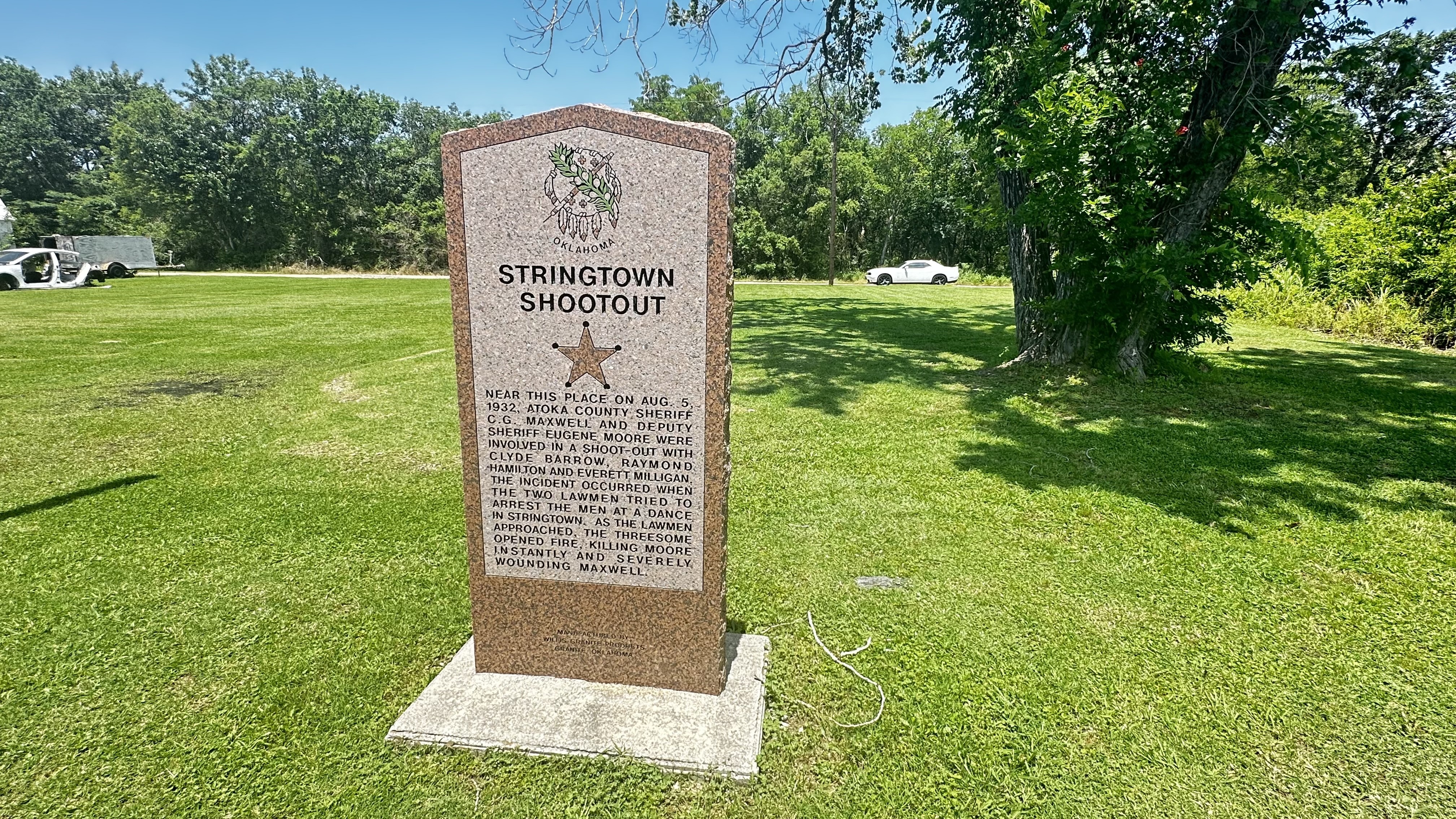
In the dusty heat of August 1932, a small Oklahoma town became the unlikely backdrop for a deadly encounter. This event would set the tone for one of America’s most infamous crime sprees. The town was Stringtown, and the outlaws were Bonnie Parker and Clyde Barrow — two names that would soon strike fear across the heartland.
A Dance Turned Deadly
It was the night of August 5th, during a public dance held on the grounds of a local American Legion Hall in Stringtown, Oklahoma. Clyde Barrow, accompanied by Raymond Hamilton and possibly Bonnie Parker, rolled into town with trouble not far behind. Though the dance was a celebration, Clyde and his gang were there for other reasons. They were reportedly seeking to pass through unnoticed while hiding from the law.
Deputy Eugene C. Moore and Atoka County Sheriff C.G. Maxwell were called to the scene after a local resident grew suspicious of the men’s behavior. When the officers approached the parked car to question them, Clyde and Hamilton opened fire without warning.
Deputy Moore was killed instantly — becoming the first law enforcement officer to die at the hands of the Barrow Gang. Sheriff Maxwell was seriously wounded but survived. That moment marked a critical turning point: from petty criminals to cold-blooded cop killers.
Stringtown Shootout Site
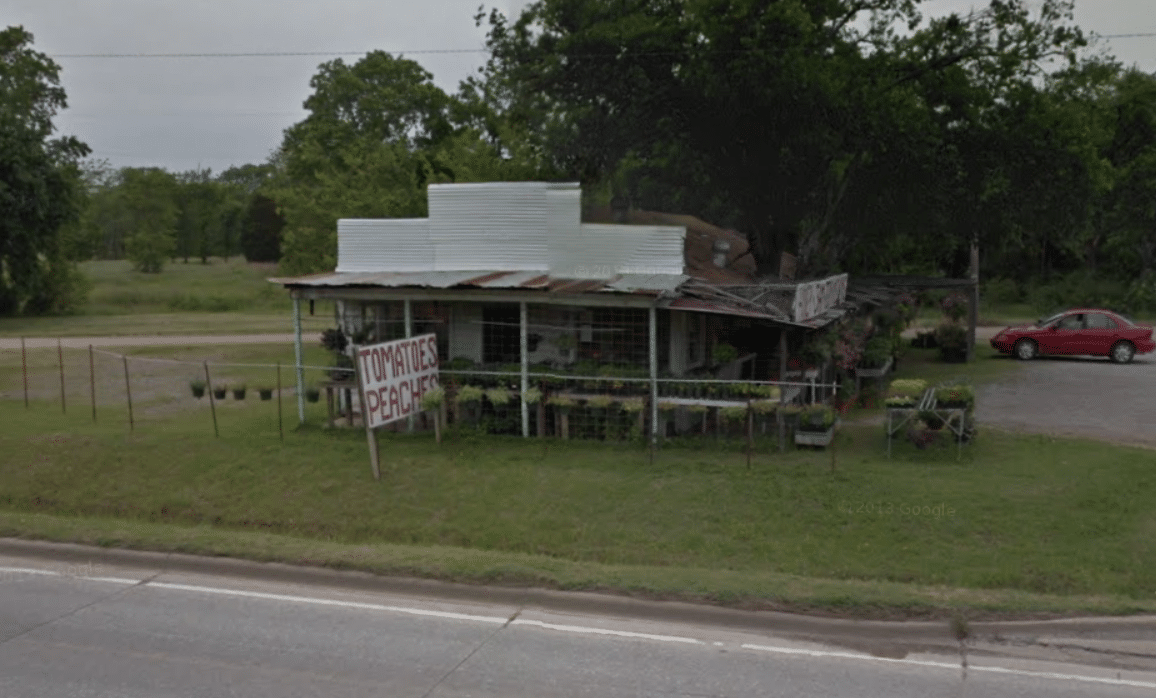
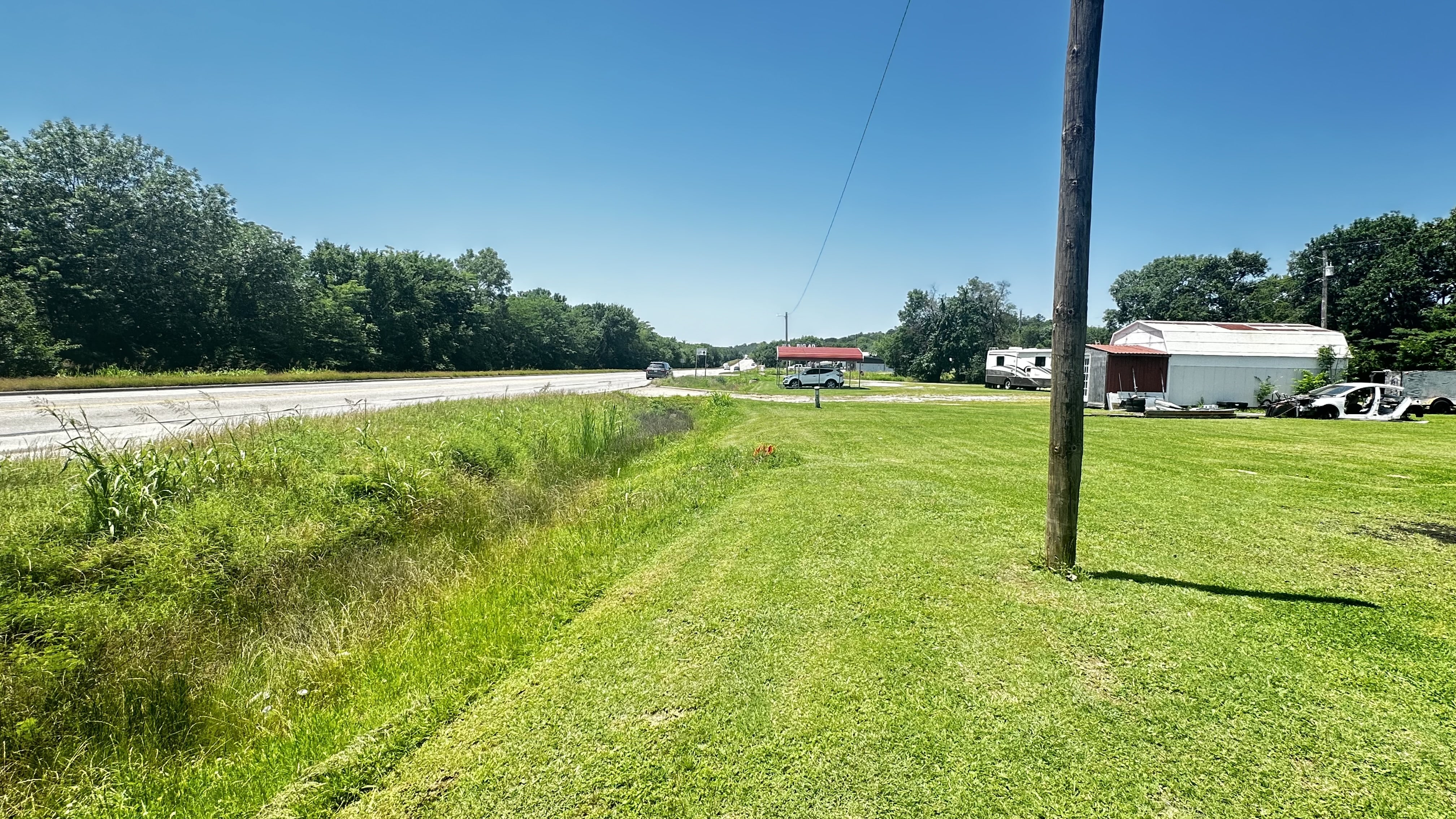
The old dance hall is no longer standing. However, the top image, a 2011 Google Earth image, shows the building prior to its demise. The bottom picture looks from the historical marker down toward where the old dance hall once stood. The approximate location is where the white car under the red roof is parked.



Cases near this location
Showing cases with mapped locations within 50 miles of this stop.

Bonnie’s Role
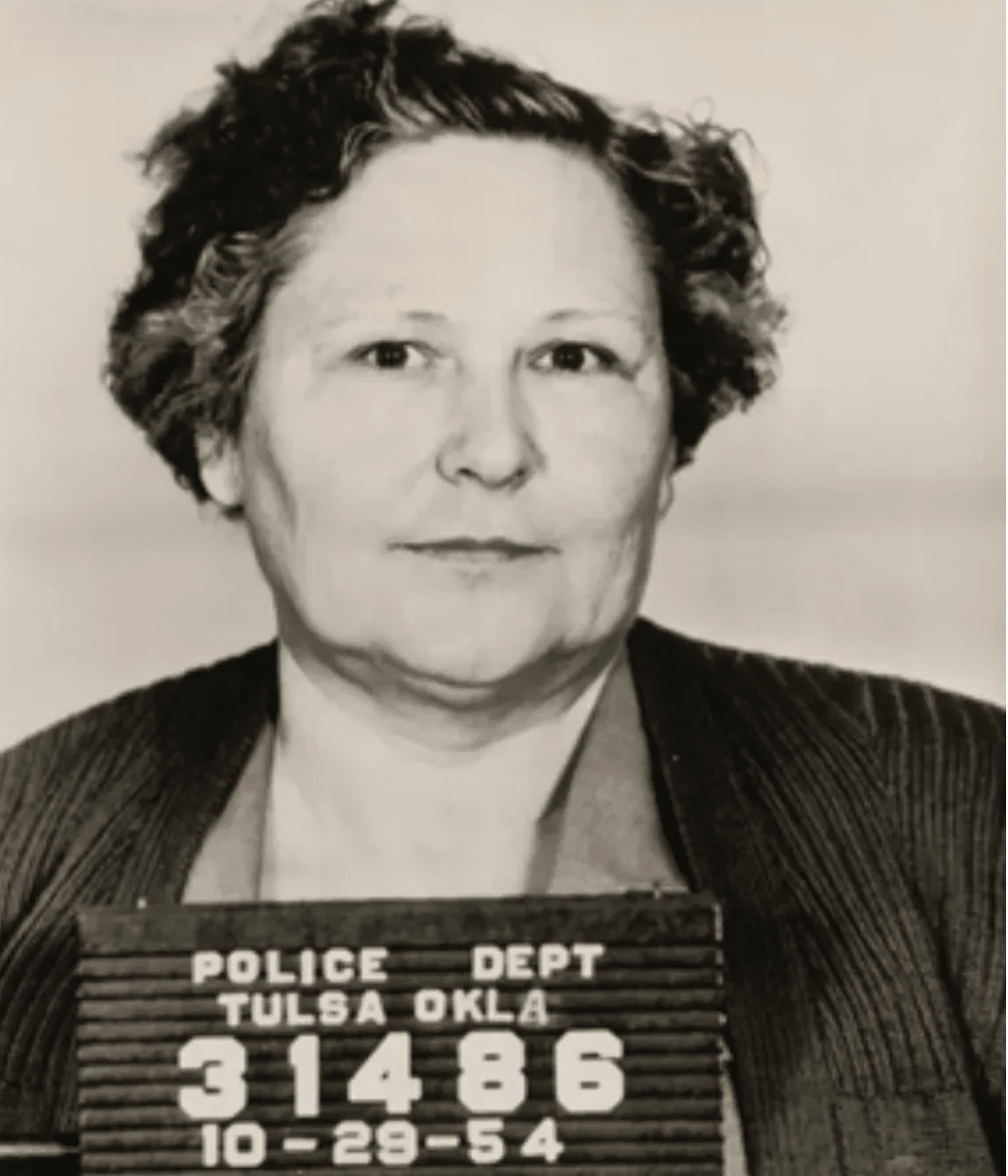
Whether Bonnie Parker was present at the Stringtown shooting has been debated. Some eyewitnesses claimed to see a woman in the car; however, others suggested she wasn’t there at all. What’s certain is that this event would forever associate the couple with lethal violence against police. This image fed into their myth and media infamy.
Why It Mattered
The Stringtown shooting wasn’t just another crime — it was the first time the Barrow Gang killed a law enforcement officer. From that point forward, they were no longer just bank robbers or car thieves. They were murderers. The killing galvanized law enforcement across Oklahoma and surrounding states, leading to heightened efforts to track them down.
As their notoriety grew, Bonnie and Clyde’s crimes became more frequent and more violent. This increase led to a multi-state manhunt that wouldn’t end until their ambush and death in 1934.
The Legacy of Stringtown
Today, the Stringtown incident is remembered as a grim milestone in the Barrow Gang’s bloody history. A marker in the town honors Deputy Moore’s sacrifice. This serves as a reminder of how quickly violence escalated during the outlaw era of the 1930s.
In hindsight, the Stringtown dance might have seemed like just another summer gathering. But that night, it became the place where Bonnie and Clyde crossed a line they could never uncross — from outlaws to legends written in blood.
Reader Notes
Add to the story.
Share a memory, correction, lead, or detail that helps the place come into focus.
Leave a note