

By late spring of 1934, Bonnie Parker and Clyde Barrow had become the most notorious fugitives in America. For two years they robbed banks, held up rural stores, and killed police officers who tried to stop them. Newspapers painted them as glamorous outlaws, but for law enforcement, they were ruthless killers who had eluded capture too long.
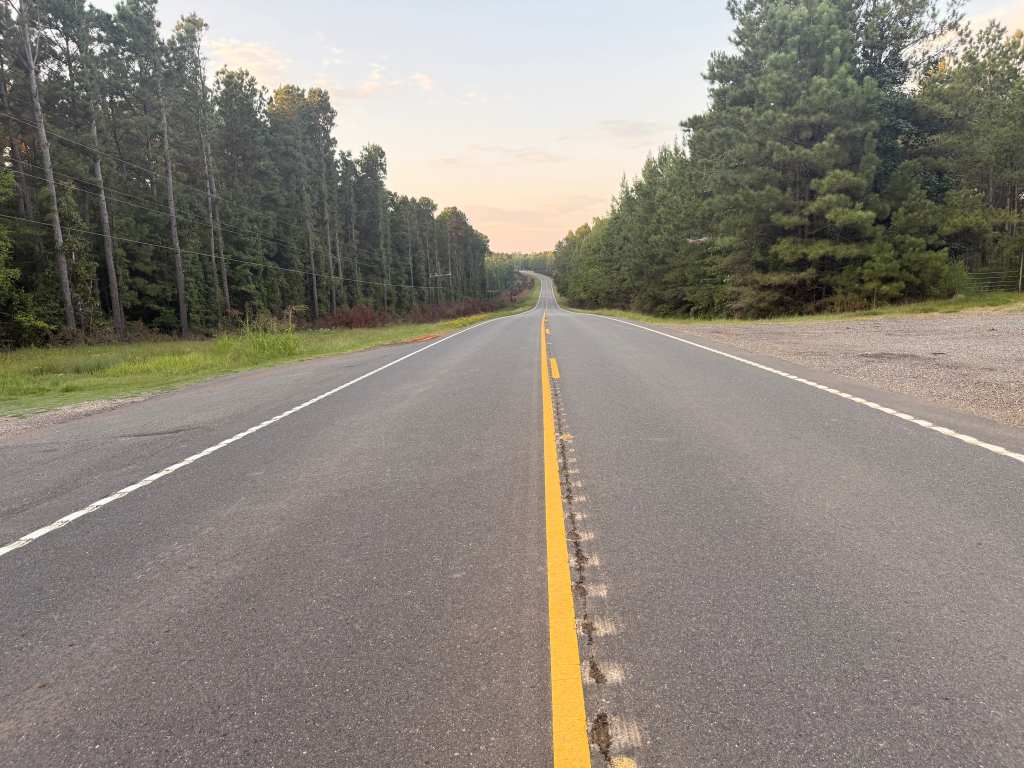
The final chapter began on May 22, 1934, near Gibsland, Louisiana, and ended in gunfire the next morning on a quiet stretch of Highway 154.
May 22, 1934: The Day Before
Morning in Bienville Parish
On the morning of May 22, Bonnie and Clyde were with Henry Methvin, a young Barrow Gang recruit. Henry’s father, Ivy Methvin, owned property near Gibsland. Clyde trusted the family, believing they offered safe ground.
What Clyde didn’t know was that Ivy had struck a deal with law enforcement. In exchange for protecting Henry from the death penalty, Ivy agreed to help set a trap (Guinn, 2009).
Afternoon: Growing Tension
The fugitives stayed close to the Methvin property that afternoon. Clyde had been driving almost nonstop in recent days, switching stolen cars and scouting roads. He also worried about Henry’s legal troubles, which included the murder of a Texas constable (Phillips, 1999). Clyde’s loyalty to Henry and his trust in Ivy kept him in Bienville Parish longer than usual.
Nightfall: Restless Sleep
That night, Bonnie and Clyde remained near Gibsland. Some accounts suggest they slept in the Ford itself, while others place them at a nearby safe house tied to the Methvins (Ramsey, 2014). Bonnie’s health was fragile; she still struggled with severe burns and a limp from a 1933 car accident. Clyde, meanwhile, was determined to keep moving at dawn.
Meanwhile: The Posse Waits
As Bonnie and Clyde tried to rest, six lawmen made their final preparations. Frank Hamer, a former Texas Ranger, had tracked the couple for months. With him were Manny Gault, Bob Alcorn, Ted Hinton, Sheriff Henderson Jordan, and Deputy Prentiss Oakley.
That night they camped near Highway 154, just south of Gibsland, close to the community of Sailes. Ivy Methvin’s logging truck was placed partly across the road to force Clyde to slow his Ford the next morning (Knight, 2003).
May 23, 1934: The Last Morning
Sunrise in Louisiana
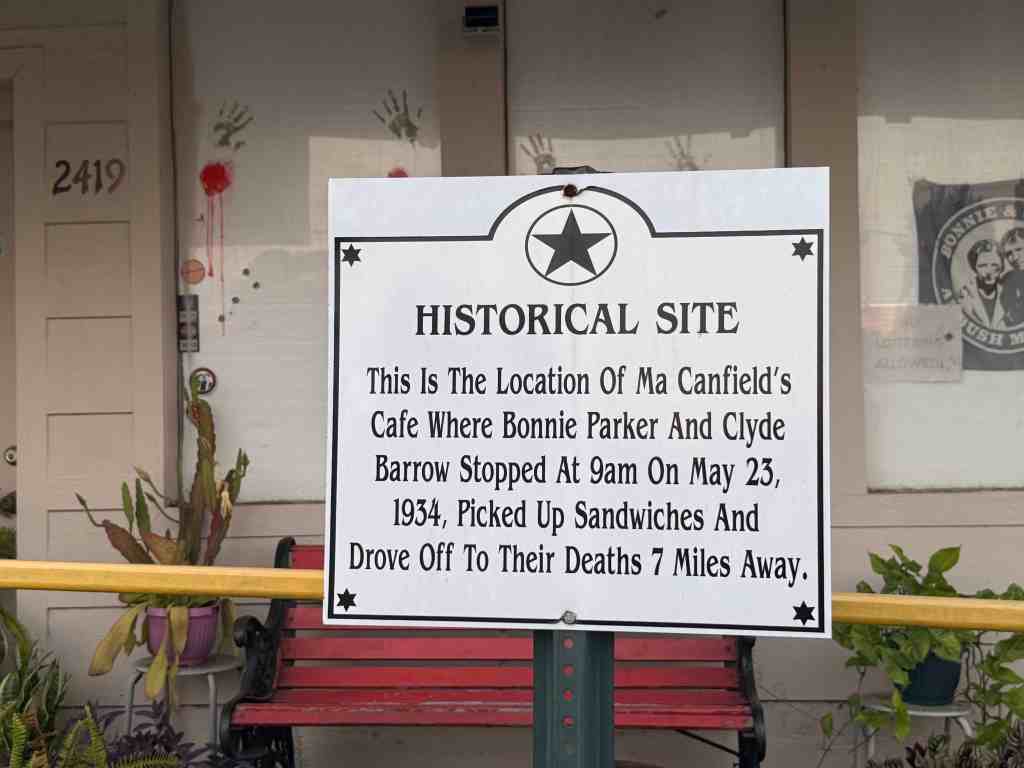
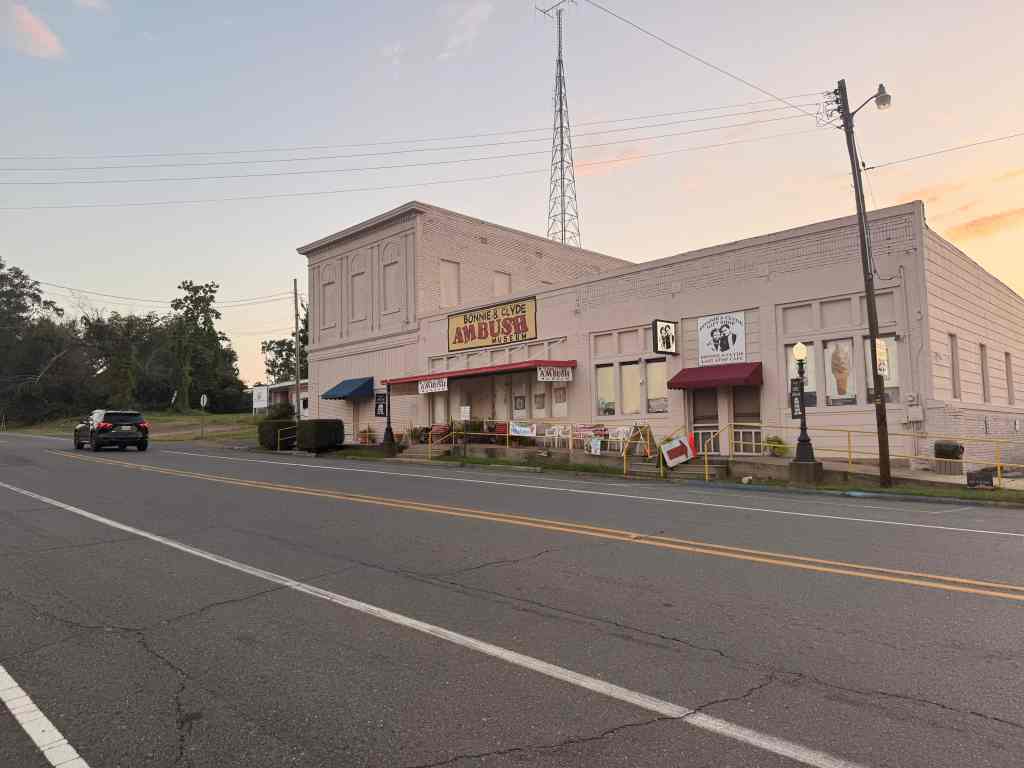
As daylight broke, Bonnie and Clyde set out in their 1934 Ford V-8 Sedan. Clyde was behind the wheel, as always, and Bonnie rode at his side. Contrary to popular legend, there is no verified evidence they stopped for breakfast at Ma Canfield’s Café in Gibsland. That story surfaced years later and is now considered folklore (Guinn, 2009).
6:00 a.m. – The Trap Is Ready
The posse crouched in the brush, rifles and automatic weapons ready. Oakley, the youngest, was nervous but determined. The Ford’s powerful engine could already be heard in the distance.
9:15 a.m. – The Ford Appears
Bonnie and Clyde’s car came into view, roaring south on Highway 154. Clyde slowed as he saw Ivy Methvin’s truck blocking part of the road. Some say Bonnie laughed, thinking Ivy had broken down.
At that moment, the ambush began.
The First Shot
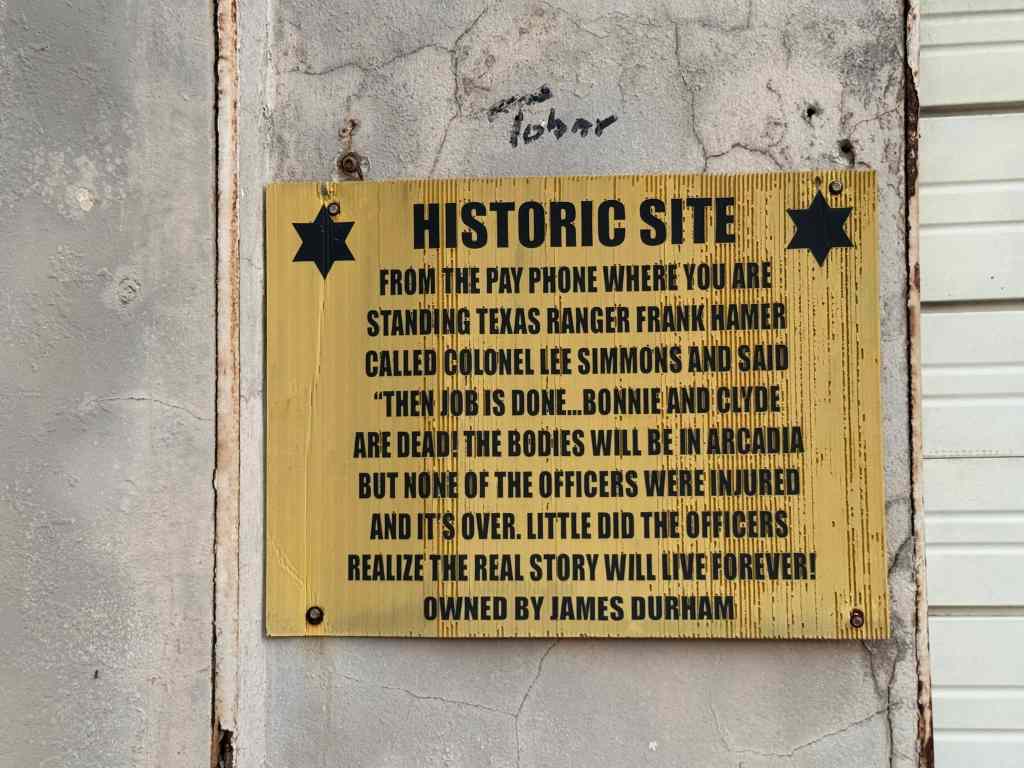
Deputy Prentiss Oakley fired first, his bullet striking Clyde in the head. He died instantly, slumping against the wheel.
Bonnie screamed as the rest of the posse opened fire.
A Storm of Bullets
In less than 20 seconds, more than 130 rounds tore into the Ford. Clyde was struck about 17 times, Bonnie more than 25. Neither had a chance to fire back. The once sleek gray Ford was left a shattered husk, riddled with bullet holes (Knight, 2003).



Aftermath of the Ambush
The gunfire echoed across the Louisiana countryside. As the smoke cleared, lawmen cautiously approached. Sheriff Jordan later recalled that Bonnie’s body still clutched part of a sandwich she had been eating (Phillips, 1999).
Word spread quickly. Locals rushed to the ambush site, cutting locks of Bonnie’s hair, tearing fragments of clothing, and pocketing shell casings as souvenirs. The lawmen struggled to control the crowd.
By mid-day, the Ford was towed to Arcadia, Louisiana, where the bodies were taken to Conger Funeral Home. Thousands gathered to see the infamous outlaws one last time.
Fact vs. Legend
Over the decades, myths have clouded the final hours of Bonnie and Clyde:
- Breakfast in Gibsland – Never confirmed by verifyable sources.
- Bonnie’s last words – No reliable record exists.
- The sandwich detail – Reported by officers but never universally confirmed.
What is beyond dispute is the timeline, the location, and the overwhelming firepower that ended their lives.
Reflection: Justice or Overkill?
It’s clear the posse had no intention of arresting Bonnie and Clyde. This was not a standoff or a warning shot gone wrong. It was a carefully planned ambush designed to kill.
While Clyde was a hardened criminal and Bonnie was by his side through multiple crimes, the sheer volume of fire—over a hundred rounds in under half a minute—feels more like premeditated murder than a clean act of justice. They were outgunned, surprised, and given no chance to surrender.
To many, the ambush marked the end of a violent crime spree. But it also revealed how far law enforcement was willing to go, blurring the line between justice and vengeance. The last morning of Bonnie and Clyde was as much about sending a message as it was about ending their run.
Legacy of Their Last Hours
The final day of Bonnie and Clyde marked the end of one of the most sensational manhunts of the Depression era. For the public, it became legend. For law enforcement, it was long-delayed justice.
On May 22, they were fugitives planning their next move. On May 23, they were dead within seconds of slowing their car.
History remembers their final morning as the day justice caught up with them. But when you look at the details, it’s hard not to see it as overkill—justice carried out with vengeance rather than restraint.
References
- Guinn, J. (2009). Go Down Together: The True, Untold Story of Bonnie and Clyde. Simon & Schuster.
- Knight, J. A. (2003). Bonnie and Clyde: A Twenty-First Century Update. Eakin Press.
- Phillips, J. N. (1999). Running with Bonnie and Clyde: The Ten Fast Years of Ralph Fults. University of Oklahoma Press.
- Ramsey, W. (2014). Bonnie and Clyde: A Biography. ABC-CLIO.

