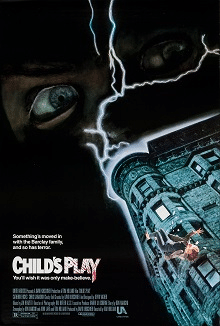
What if your child’s favorite toy harbored the soul of a serial killer? This nightmare scenario became reality for horror fans in 1988 when Child’s Play introduced the world to Chucky—a seemingly innocent Good Guy doll with a murderous secret.
The film tapped into a primal fear that resonates with audiences decades later: the corruption of childhood innocence. Director Tom Holland crafted more than just another slasher film; he created a psychological horror experience that transforms something meant to comfort children into an instrument of terror.
Child’s Play follows the Barclay family as they unknowingly welcome evil into their home through a discounted doll purchased by a well-meaning mother. What starts as a generous gift quickly becomes a fight for survival when the doll reveals its true nature—the vengeful spirit of Charles Lee Ray, a serial killer who cheated death through voodoo.
The genius of the film lies not just in its supernatural premise, but in its masterful practical effects. Using a combination of animatronics, puppetry, and oversized sets, the filmmakers brought Chucky to life with a realism that CGI of the era couldn’t match. The result is a horror icon whose menacing presence feels tangible and immediate.
More than three decades later, Child’s Play remains a cornerstone of horror cinema, spawning sequels, remakes, and cementing Chucky’s place alongside Freddy Krueger and Jason Voorhees in the pantheon of horror villains. But what makes this killer doll so enduringly terrifying?
Hideout of Charles Lee Ray





Karen’s Apartment


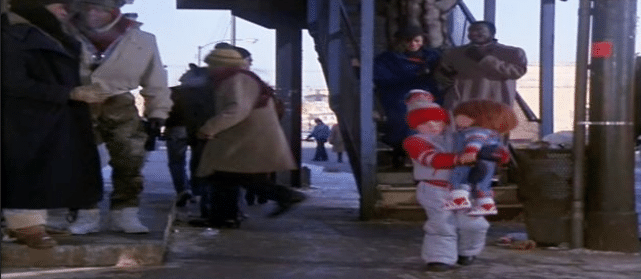
Andy Walks After Getting Off The Train

Toy Store


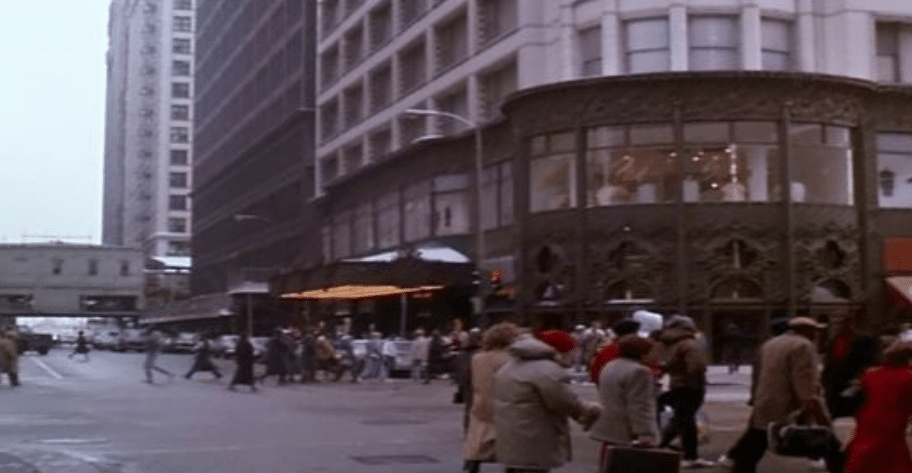
Department Store