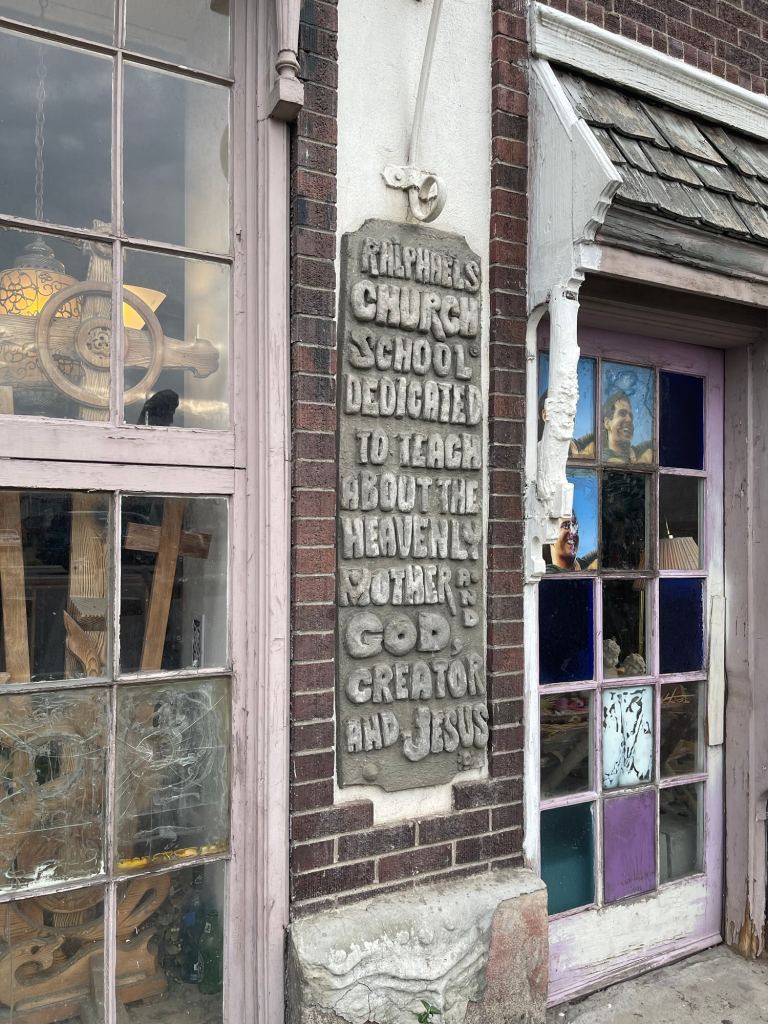
For over fifty years, the so-called “Christian School” stood along South State Street as more than just a misnamed building. It was the living, evolving canvas of self-taught artist Ralphael Plescia.
🎨 A Building Transformed into Faith-Inspired Art
The building was built in 1970 as an auto parts store and barber shop. When Ralphael Plescia took ownership, it took on a new purpose. That year marked the beginning of a dramatic transformation. Plescia saw more than just walls and rooms—he saw a canvas for spiritual expression. Over the next several decades, he reshaped the space into one the most remarkable and unconventional art environments. His work centered on biblical themes, with a particular focus on the vivid and mysterious imagery of Revelation 12. Every level of the building told a different part of his story. The structure turned into a living, breathing reflection of his faith and vision.
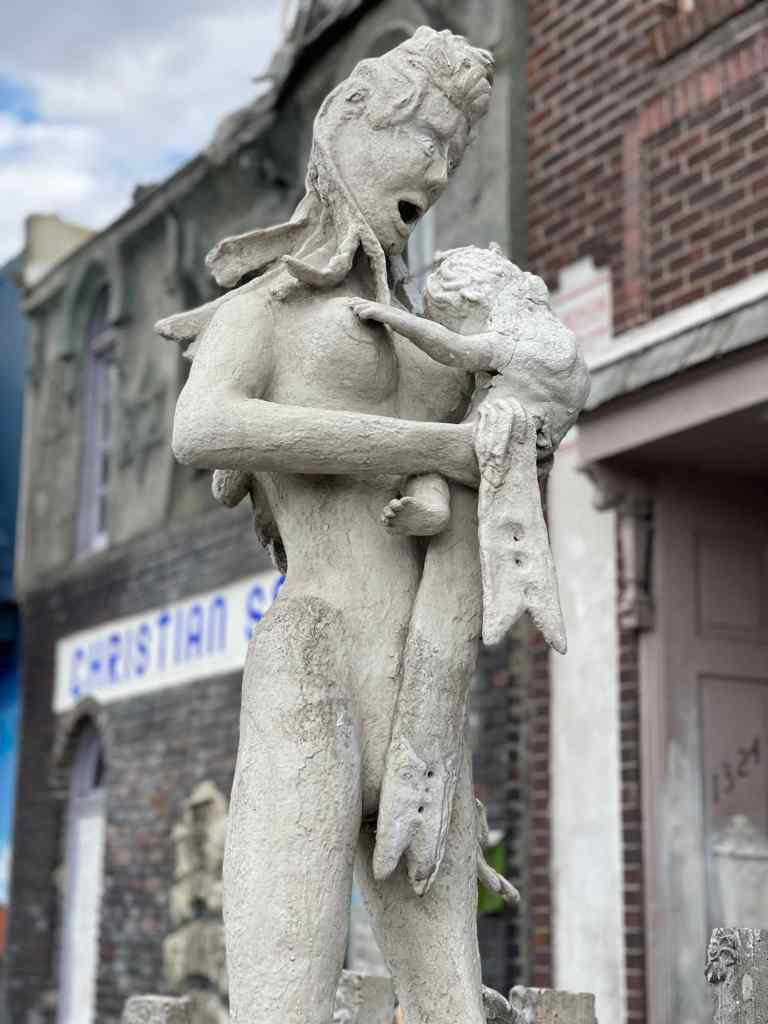
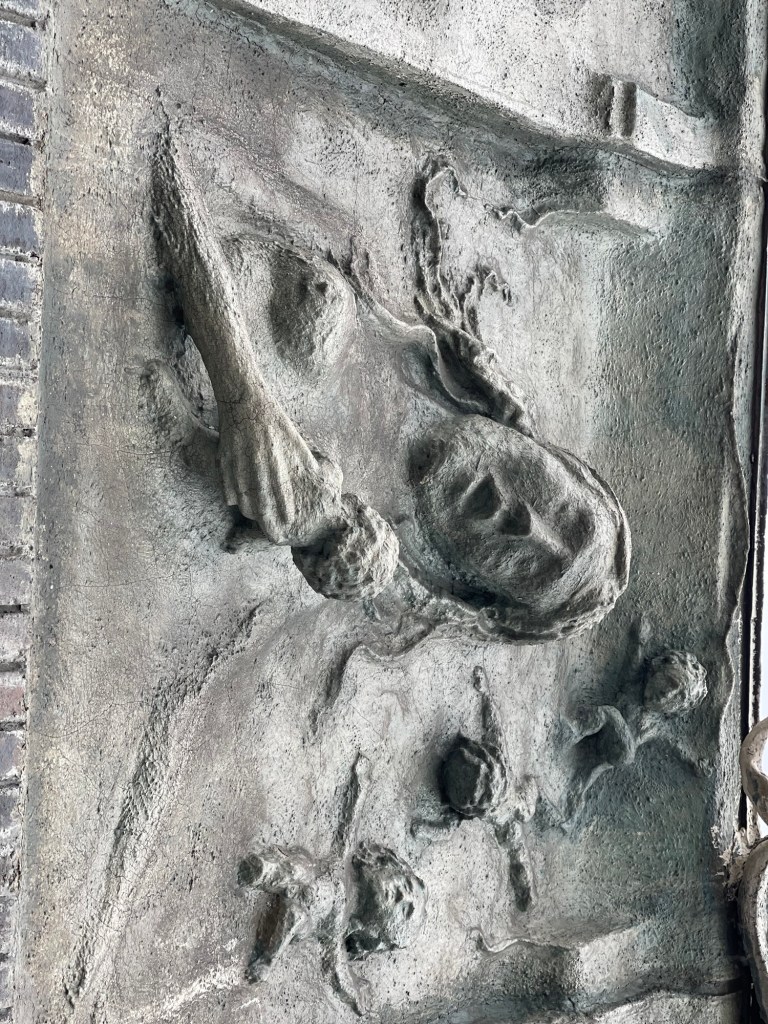
Inside, every surface—walls, ceilings, floors—served as a canvas. Plescia built and sculpted concrete reliefs. His sculptures told vivid stories that unfolded upward through the house: basement (underworld), main floor (earth), attic (heaven).
🏛️ Structure of the Spaces
- Basement: Plescia hand-dug the basement himself, carving narrow, “hellish” passages that reached all the way to the water table. The space featured a serpent’s mouth entry, eerie red lighting, and sculptures rising from shallow water. Together, these elements created a vivid and unsettling metaphor for the biblical underworld.
- Main Level: Once the family’s auto shop, it now featured painted biblical passages, sculpted figures, and salvaged relics—burnt musical instruments, comic-book fragments, and pen-scrawled scripture.
- Attic (“Heaven”): A chapel-like space lit by skylight, with angelic ceiling portraits (including family), hanging instruments, and serene religious imagery.
⏳ The Final Chapters: Dismantling & Demolition
After Plescia’s passing in August 2022, the building’s fate became uncertain. Originally deeded to Shriners Children’s Hospital through Plescia’s father’s will, the property was sold to developers in 2023. Despite determined preservation efforts by the Utah Arts Alliance, much of Plescia’s work was inseparable from the building’s structure, making full preservation impossible.
By May 29, 2025, demolition of the building was complete, leaving only rubble and salvageable pieces of artwork. The Utah Arts Alliance has since stored movable pieces at the Art Castle and continues efforts like 3D scans to document those embedded in the walls.





💭 Why It Mattered
- Outsider Faith Art: Plescia’s deeply personal interpretation of scripture—focusing on figures like the Heavenly Mother and Eve—offered a counterpoint to conventional religious spaces, reminiscent of Gilgal Garden’s unique spiritual expression.
- Unfiltered Vision: Reddit users paint a vivid picture of the site—bizarre yet mesmerizing—with accounts of divine inspiration, a massive serpent, and an underground lake glowing red: “He was commanded to tell it through art… giant serpent… underground lake cast in red light.”
- Cultural Loss: Its demolition sparked reflection on how cities preserve individually-crafted heritage versus redevelopment priorities.
🔍 What to Explore Now
- Art Castle (Utah Arts Alliance): Many freed artworks from Plescia’s home are wound here—worth visiting to see portraits, sculptures, and instruments.
- Plescia’s Home on California Ave: Still standing, this “maze-like” site includes blue exteriors, crosses, a winding stone path, and sculptures like horses—echoing his wild aesthetic.
- Archives & Documentation: Photos, videos, and 3D scans remain online, preserving the essence of the “Christian School” for future generations.
✍️ Final Reflections
Ralphael Plescia’s “Christian School” was a bold, unapologetic expression of faith and imagination—a space where concrete met conviction. The building may be gone, but its story lives on. It continues to inspire those who value tradition, craftsmanship, and turning belief into something lasting.